What is Arduino?
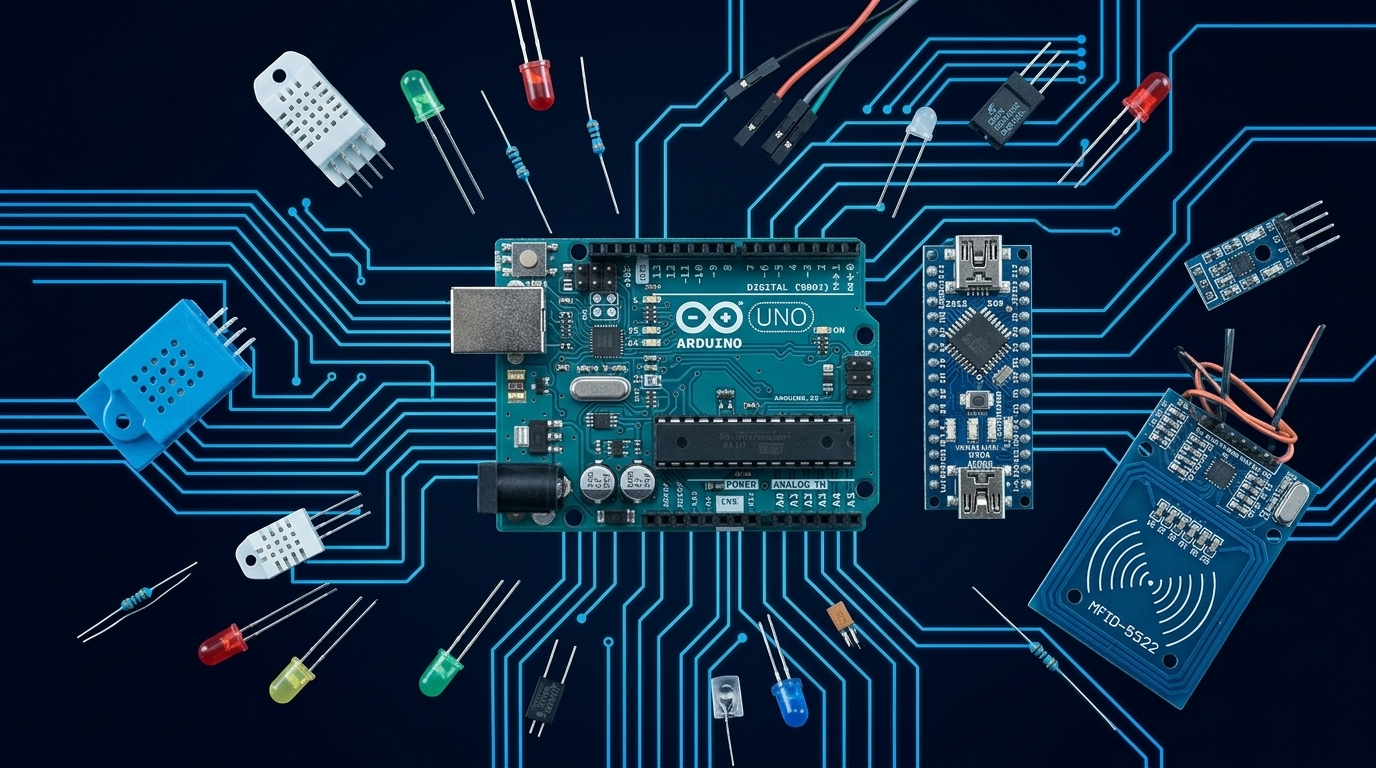
Arduino is an open-source electronics platform consisting of microcontroller boards and a programming environment based on C/C++. Unlike Raspberry Pi which runs a full Linux operating system, Arduino is a microcontroller — it runs a single program directly on bare metal hardware. This makes it fast, predictable, and capable of interfacing with hardware at a level that computers running full operating systems struggle with. In cybersecurity, Arduino is used to build custom keystroke injection devices, RFID readers and writers, hardware implants, logic analyzers, protocol sniffers, and physical security testing rigs.
Is This Right for You?
This is for you if...
- You want to build custom security hardware rather than buying pre-made tools
- You’re interested in hardware hacking, IoT security research, or embedded systems
- You want to understand how keystroke injection devices and hardware implants work at code level
- You enjoy building things — Arduino rewards curiosity and hands-on experimentation
- You want to prototype custom RFID or RF security research tools at low cost
This is NOT for you if...
- You want ready-to-deploy security tools — buy Hak5 hardware instead
- You need a full Linux environment for your security tools — Raspberry Pi is the right choice
- You have no interest in electronics or coding — the learning curve requires both
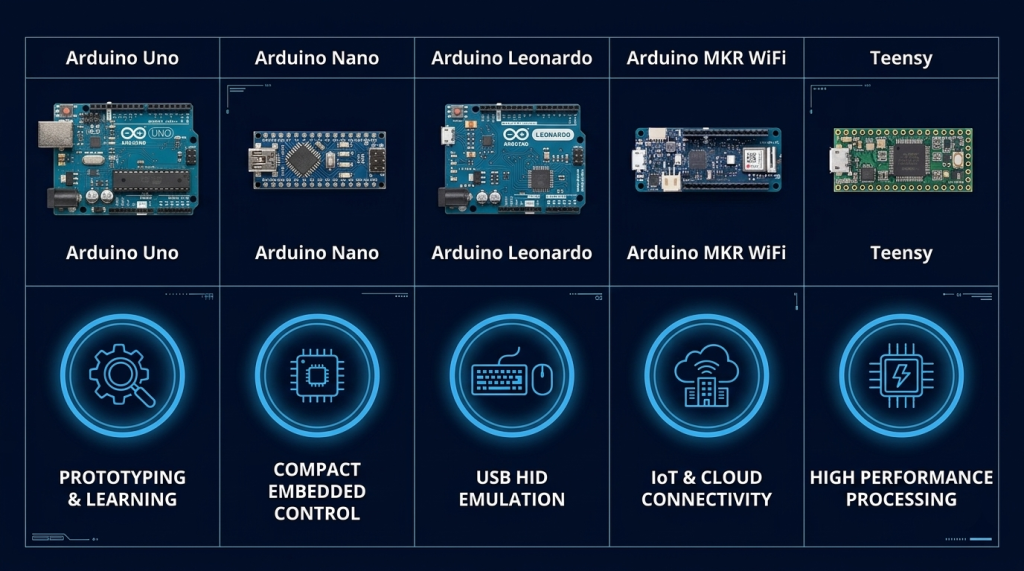
Arduino Boards — Which One for Security Work?
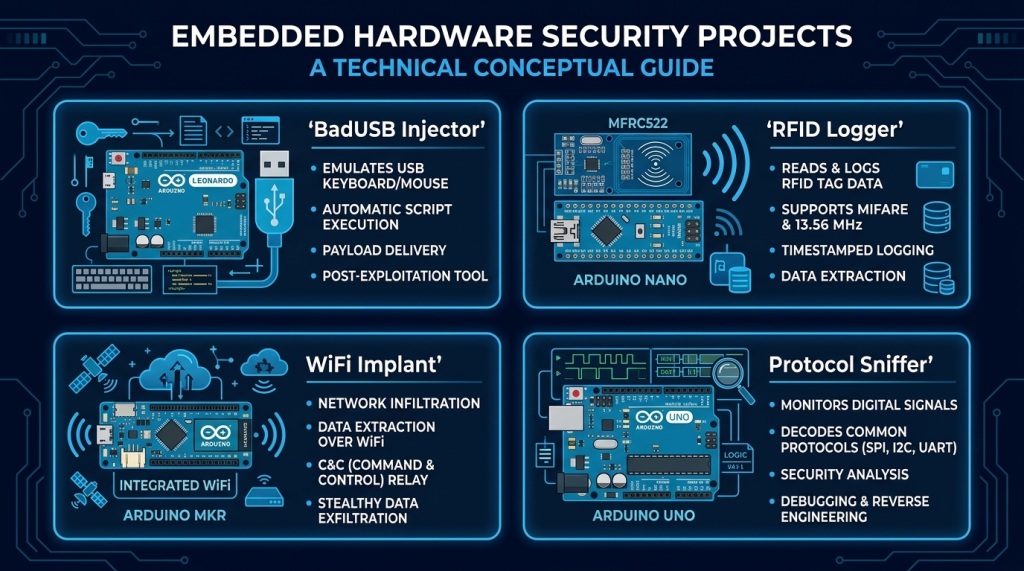
How Security Professionals Use Arduino
Keystroke Injection (BadUSB) Attacks
The Arduino Leonardo and boards with ATmega32U4 chips support native USB HID emulation — they can impersonate keyboards and mice. A security professional programs one to appear as a keyboard when plugged into a target machine, then execute a payload in milliseconds. This is the fundamental concept behind Hak5’s USB Rubber Ducky.
- Write custom keystroke injection payloads in Arduino’s C-like language
- Test whether endpoint controls block unauthorized HID device attachment
- Build budget alternatives to commercial BadUSB devices for lab use
RFID / NFC Reader and Writer Circuits
Combined with MFRC522 or PN532 NFC/RFID modules (under $5 each), Arduino becomes a fully functional RFID reader and writer. Security researchers use Arduino-based RFID rigs to build automated card testing systems, logging infrastructure, and custom cloning rigs.
- Build a continuous RFID logging device that captures card UIDs passively
- Create automated RFID testing rigs that cycle through multiple card types
- Prototype custom RFID security research hardware before investing in Proxmark 3
Hardware Implants and Protocol Analysis
Arduino’s small form factor and low power consumption make it ideal for covert hardware implants. Combined with wireless modules (ESP8266 or NRF24L01), an Arduino can silently capture keystrokes, monitor GPIO signals, or transmit data over RF without any visible external connection. It can also interface directly with SPI, I2C, and UART protocols — allowing security researchers to sniff traffic between ICs on a circuit board.
Essential Components for Security Projects
iCopy-X — The Field Cloner
The iCopy-X is purpose-built for one thing: reading and cloning RFID cards fast in the field. It has a built-in display, rechargeable battery, and requires no laptop or companion app. For physical penetration testers who need to clone a badge quickly during an on-site assessment, iCopy-X is faster than Proxmark 3 in the field.
Where to Get Arduino Hardware
── SecVerse Marketplace — Arduino ──
Recommended Resources
How to Get Started
- Buy an Arduino Uno starter kit. The Uno is the most beginner-friendly board. A starter kit (~$30–40) includes the board, USB cable, breadboard, jumper wires, LEDs, and basic components — everything needed for the first 20 projects.
- Blink an LED, then blink it with a pattern you control. Sounds trivial. It isn’t. The moment you control physical hardware with code you wrote, the mental model for RFID modules, radio modules, and sensors becomes clear. Don’t skip the basics.
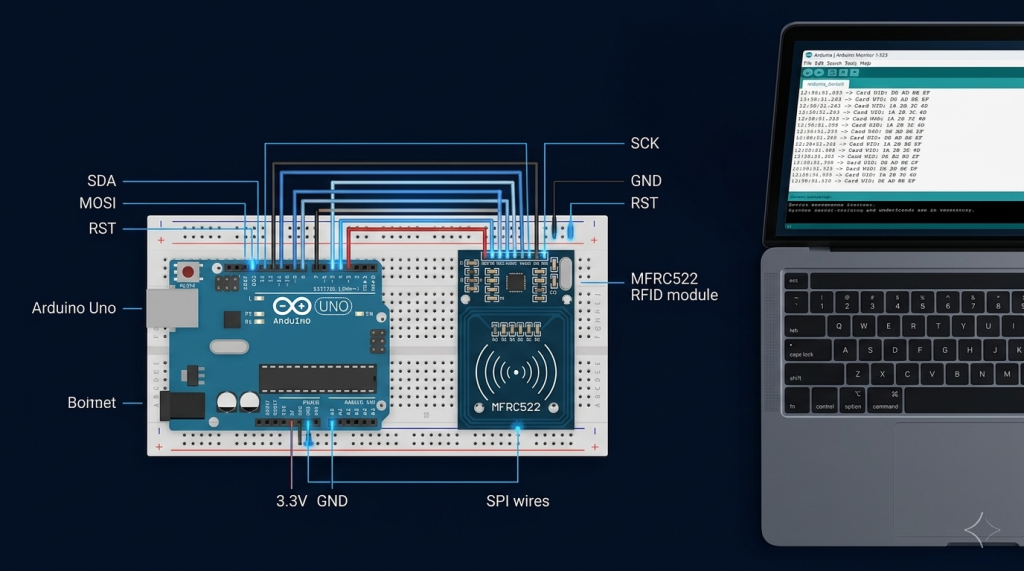
- Build an RFID reader as your first security project. Connect an MFRC522 module via SPI. Install the MFRC522 Arduino library. Upload the example sketch. Tap your contactless card. Watch the UID print to the serial monitor. That’s your first RFID read.
📌 Note: The information on this page — including certification details, exam codes, pricing, and salary ranges — is regularly reviewed and updated to reflect the latest data from official sources. Always verify current details directly with the relevant certification body or platform before making any decisions.
Community & Support
── Arduino Communities ──