EC-Council

Home > Resources > Learning Paths > EC-Council
CEH, CPENT, CHFI, LPT Master — Credentials That Build an Offensive Security Career
EC-Council Certification Toolkit

What is EC-Council?

EC-Council — the International Council of E-Commerce Consultants — is one of the world’s largest cybersecurity certification bodies, focused specifically on offensive security, ethical hacking, and penetration testing. Their flagship certification, the CEH (Certified Ethical Hacker), is one of the most recognized security credentials globally. Founded in 2001, EC-Council has certified over 350,000 professionals across 140 countries, with U.S. Department of Defense recognition under Directive 8570.

“Our certifications are developed by IT professionals, ensuring they reflect the skills employers need. They are vendor-neutral, industry-recognized credentials that validate foundational IT skills across various domains.”

If you’re building a security career and want employers to take your resume seriously from day one — CompTIA is where most people start. And for good reason.

Is This Right for You?

This is for you if...

  • You want structured ethical hacking training with a recognized credential
  • You need DoD 8570 compliance — CEH qualifies for IAT Level II and IAM Level II roles
  • You’re targeting penetration testing roles at organizations that specify CEH
  • You prefer structured curriculum over self-directed offensive learning
  • You want a stepping stone toward OSCP or more advanced offensive certifications

This is NOT for you if...

  • You want the most hands-on, practical offensive cert — OSCP beats CEH on that measure
  • You’re already experienced in penetration testing — CEH covers broad concepts, not deep technique
  • Budget is tight — EC-Council training is expensive compared to OSCP’s self-study model

Certification Roadmap

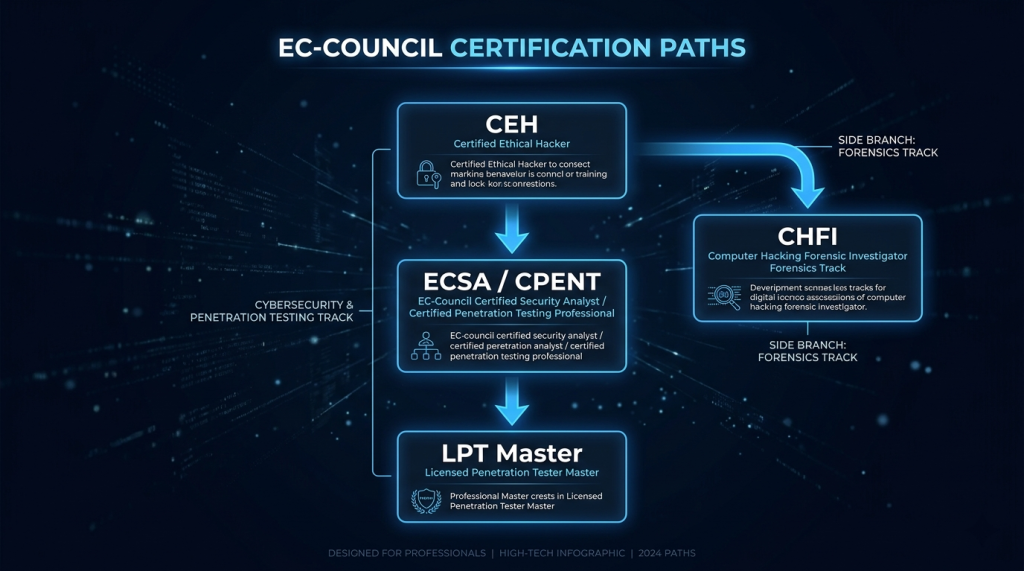
CEH Foundation → ECSA/CPENT Specialization → LPT Master: The Offensive Security Ladder
EC-Council Certification Roadmap Diagram

Phase 1 — Ethical Hacking Foundation

CEH covers 20 hacking domains. Two versions matter:

Certification Exam Code Format Duration Passing Score
CEH (Knowledge)
312-50
125 MCQ
4 hours
70% (varies)
CEH (Practical)
CEH Practical
20 real-world challenges
6 hours
70%

Phase 2 — Penetration Testing Specialization

Certification Format Duration Focus
ECSA
MCQ + Practical
Multiple stages
Methodology, analysis, reporting
CPENT
Live cyber range
24 or 48 hours
Advanced pentest — all domains, pivoting, AD attacks

Phase 3 — Digital Forensics Track (CHFI)

The Computer Hacking Forensic Investigator (CHFI) certification covers digital forensics investigation — evidence collection, analysis, and reporting.

Certification Exam Code Focus Exam Length
CHFI
312-49
Digital forensics, evidence analysis, incident investigation
150 questions / 4 hours

Phase 4 — Expert Level

LPT Master is a 3-part practical exam over 18 hours in a real network environment — no multiple choice, no shortcuts.

Certification Format Duration Focus
LPT Master
3-part practical
18 hours total
Advanced exploitation, pivoting, enterprise-scale reporting
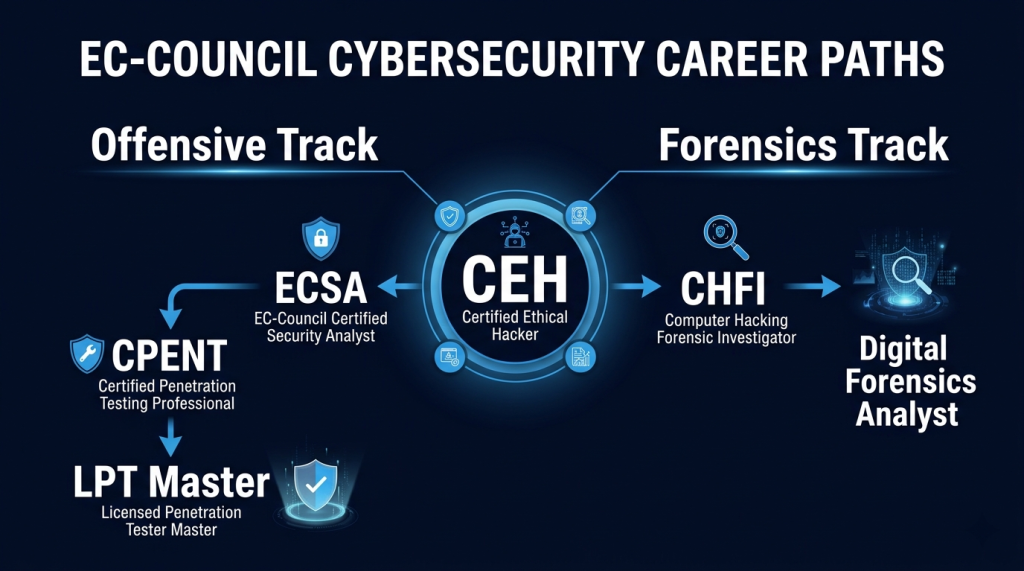
Offensive Track vs Forensics Track: Two Directions After CEH
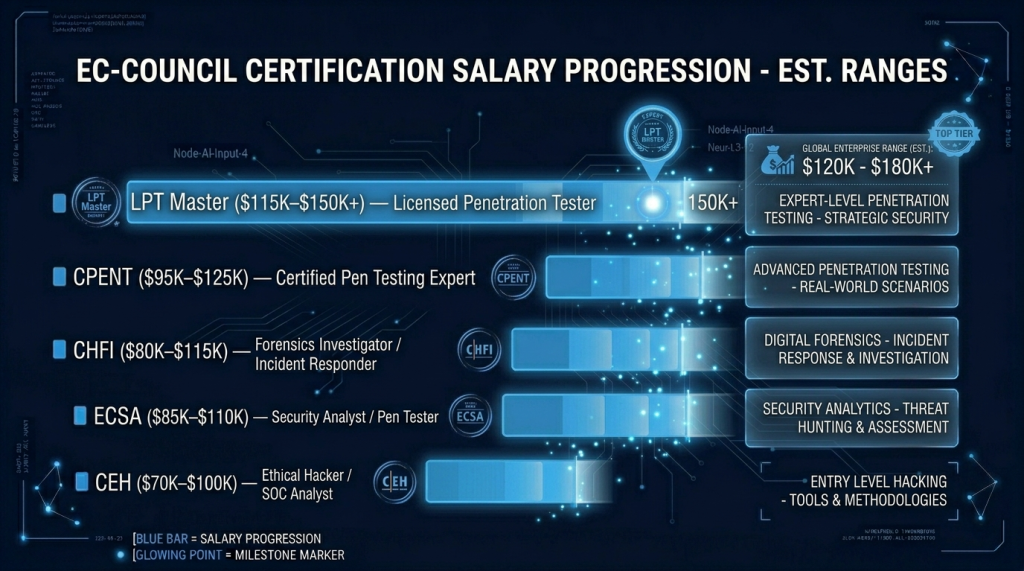
EC-Council Salary Comparison Chart

Career Opportunities

Certification Target Job Titles Average Salary (US)
CEH
Ethical Hacker, Security Analyst, Junior Penetration Tester
$90,000 – $160,000
ECSA
Security Consultant, Vulnerability Assessment Analyst
$85,000 – $130,000
CPENT
Penetration Tester, Red Team Operator
$110,000 – $170,000
CHFI
Digital Forensics Analyst, Incident Responder
$80,000 – $140,000
LPT Master
Senior Penetration Tester, Principal Consultant
$120,000 – $180,000
Average US Salaries by EC-Council Certification — CEH Through LPT Master
EC-Council Salary Comparison Chart

Recommended Resources

Official Study Guides

Where to Practice

── Hands-On Practice Platforms ──

  • TryHackMe — CEH-aligned learning paths for concept reinforcement  
  • Hack The Box — hands-on machines for real penetration testing skills 
  • PentesterLab — web application security aligned with CEH domains 
  • OffSec Proving Grounds — realistic pentest environments for CPENT prep 

How to Get Started

  1. Get Security+ first if you don’t have it. CEH assumes foundational security knowledge. Security+ makes the CEH curriculum significantly easier to absorb.
  2. Decide: official training or self-study. EC-Council official training includes labs. Self-study with Matt Walker plus TryHackMe and HTB is a proven, cheaper alternative.
  3. Don’t stop at CEH Knowledge — do the Practical. The Practical separates CEH holders who can actually hack from those who passed a multiple-choice test. Book it immediately after the Knowledge exam.

📌 Note: The information on this page — including certification details, exam codes, pricing, and salary ranges — is regularly reviewed and updated to reflect the latest data from official sources. Always verify current details directly with the relevant certification body or platform before making any decisions.

Community & Support

Related Articles

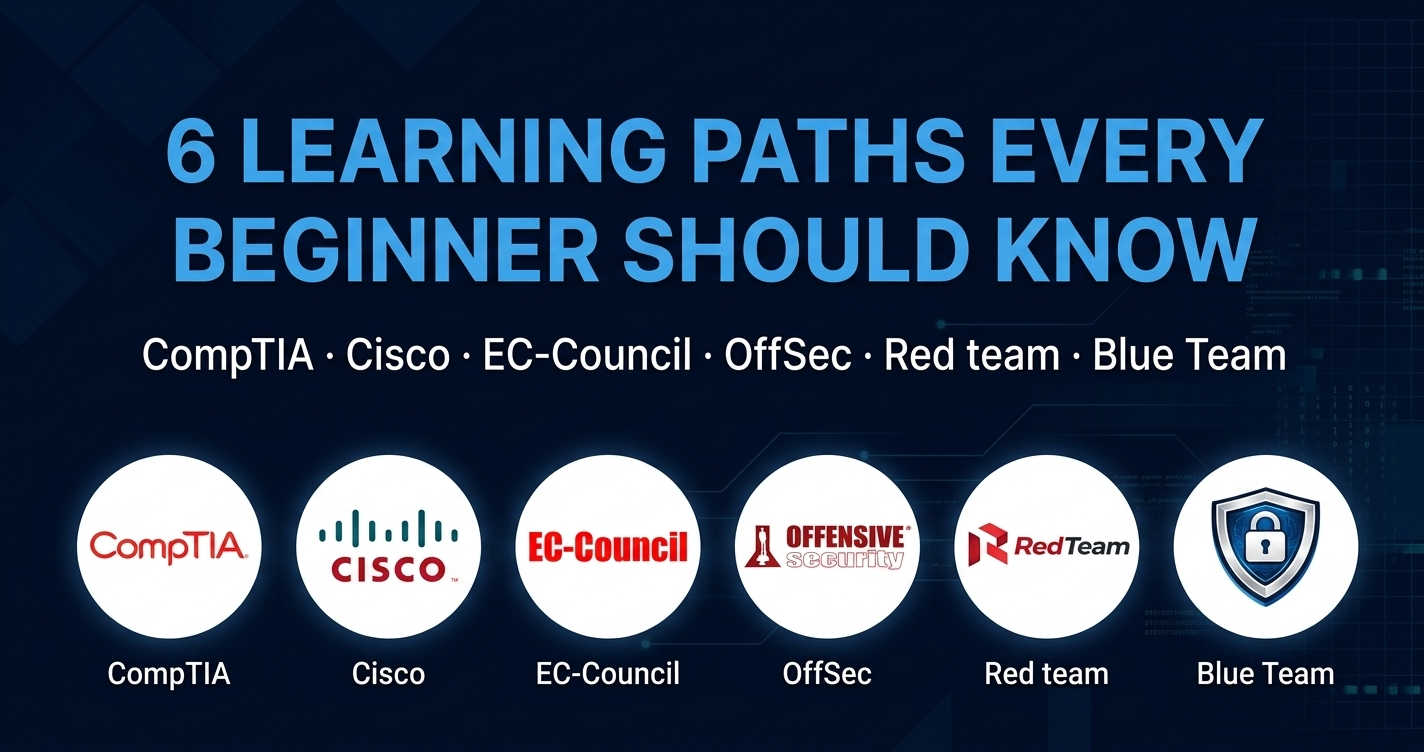
The 6 Learning Paths Every Cybersecurity Beginner Should Know

Affiliate Disclaimer: Some links in this article are affiliate links. This means if you click a link and make a purchase, SecVerse may earn a small commission — at no extra cost to you. We only recommend tools we genuinely believe in and that we consider useful for your cybersecurity learning journey. Our editorial opinions are never influenced by affiliate relationships. Introduction: **In our first guide**, we covered how to start learning cybersecurity without feeling overwhelmed. If you haven’t read it yet, start there. Now, let’s talk about which path to take once you’re ready. When I decided to get into cybersecurity 20 years ago after I graduated from school of engineering as computer engineer, I had no idea which path to take. I bought a CEH course first. Then I bought a Security+ book. Then I tried to learn networking. I was all over the place. Don’t be me.

Read More »

How to Start Learning Cybersecurity Without Feeling Overwhelmed

Affiliate Disclaimer: Some links in this article are affiliate links. This means if you click a link and make a purchase, SecVerse may earn a small commission — at no extra cost to you. We only recommend tools we genuinely believe in and that we consider useful for your cybersecurity learning journey. Our editorial opinions are never influenced by affiliate relationships. Introduction: The Overwhelm is Real (But Avoidable) Let’s be honest with ourselves to avoid the shock and be realistic. Cyber security is huge, branching, and massive field. When I decided to get and start in this field 20 years ago. I made every mistake imaginable: Bought expensive courses I never finished. Tried to learn everything at once – pentesting, malware analysis, cloud security, forensics. All in short time. Got trapped in “tutorial”- watching videos for hours but never actually doing anything because of not practicing them and being confused.
Read More »