What is ISO/IEC Information Security?
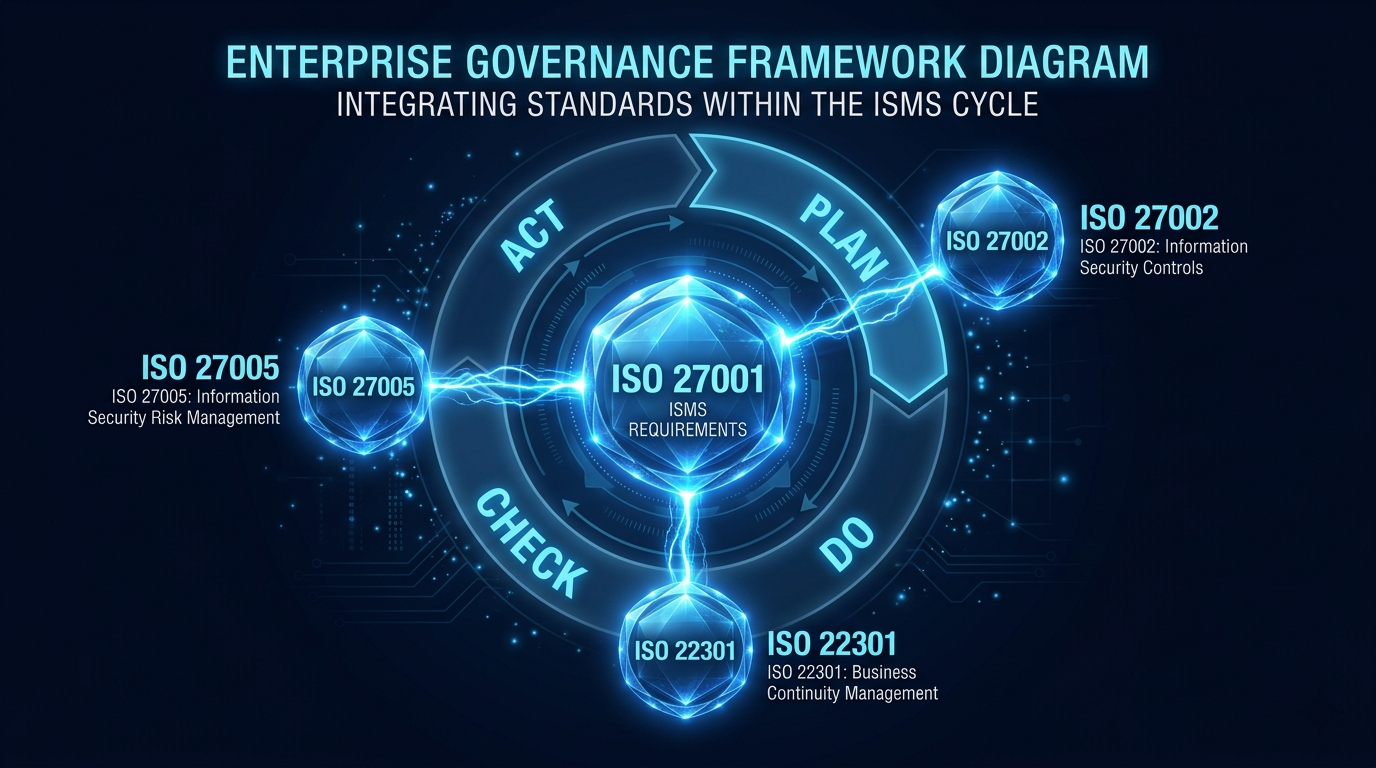
ISO/IEC is the joint technical committee of the International Organization for Standardization and the International Electrotechnical Commission. Together they publish the world’s most widely adopted information security management standards — used by organizations in every industry across 160+ countries. ISO describes the 27000 family:
The ISO/IEC 27000 family of standards helps organizations keep information assets secure. Using this family will help your organization manage the security of assets such as financial information, intellectual property, employee details, or information entrusted to you by third parties.
For security professionals, ISO certifications validate the governance, risk, and compliance skills that technical certifications like OSCP and Security+ don’t cover. Organizations implementing ISO 27001 hire specifically for Lead Implementers and Lead Auditors. CISO-track professionals need this framework.
Is This Right for You?
This is for you if...
- You’re targeting GRC (Governance, Risk, Compliance) roles or CISO-track positions
- You need to implement or audit an Information Security Management System (ISMS)
- Your organization is pursuing ISO 27001 certification and needs qualified practitioners
- You want to complement technical certifications (Security+, CISSP) with governance expertise
- You’re in a region or industry where ISO 27001 compliance is a regulatory requirement
This is NOT for you if...
- You’re looking for hands-on technical security skills — CompTIA, OSCP, or Blue Team paths serve that
- You’re early in your career with no security or business experience — ISO roles require context
- You want certifications that expire never — ISO credentials require recertification cycles
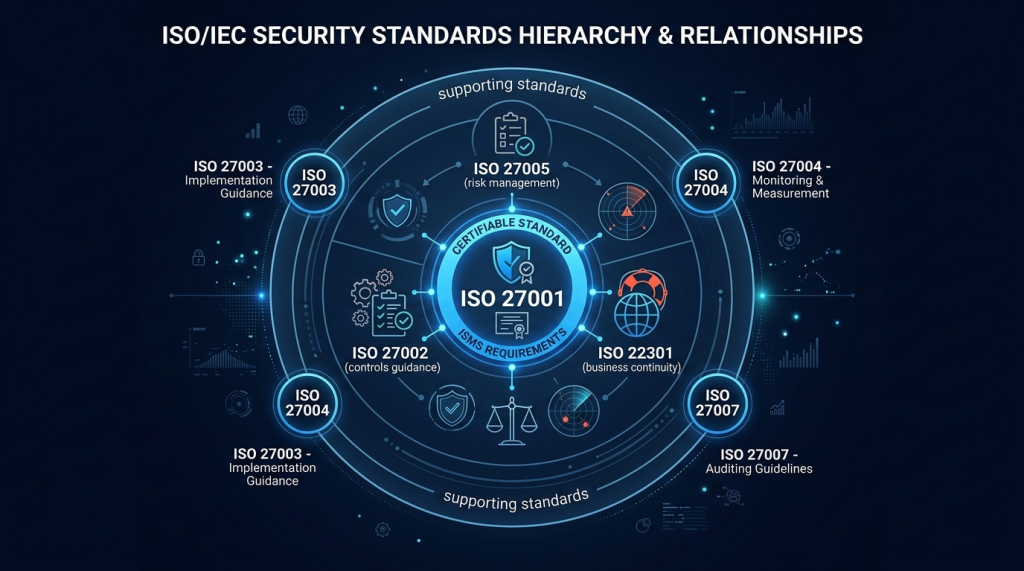
The ISO/IEC 27000 Family
| Standard | Title | Purpose | Who Needs It? |
|---|---|---|---|
|
ISO/IEC 27001 |
ISMS Requirements |
The certifiable standard — defines ISMS requirements |
Organizations seeking certification, Lead Implementers, Lead Auditors |
|
ISO/IEC 27002 |
Information Security Controls |
Controls guidance — 93 controls across 4 themes |
Security managers, implementers, auditors |
|
ISO/IEC 27005 |
Information Security Risk Management |
Risk assessment and treatment methodology |
Risk managers, GRC analysts, CISOs |
|
ISO/IEC 22301 |
Business Continuity Management Systems |
What happens when security controls fail |
BCM managers, risk officers, CISOs |
Certification Roadmap
Phase 1 — Foundation
| Certification | Provider | Focus | Duration |
|---|---|---|---|
|
ISO/IEC 27001 Foundation |
PECB / BSI / ISACA |
ISMS concepts, framework structure, key clauses |
2-day course + exam |
|
ISO/IEC 27001 Associate |
PECB |
Deeper ISMS understanding, audit concepts |
Self-study + exam |
|
CISM (Certified Information Security Manager) |
ISACA |
Information security management and governance |
Study-based exam |
Phase 2 — Professional Certifications
| Certification | Provider | Focus | Experience Required |
|---|---|---|---|
|
ISO/IEC 27001 Lead Implementer |
PECB / BSI |
Design and implement an ISMS |
2+ years security experience |
|
ISO/IEC 27001 Lead Auditor |
PECB / BSI |
Plan and conduct ISO 27001 conformity audits |
3+ years, including audit experience |
|
ISO/IEC 27005 Risk Manager |
PECB |
Information security risk management processes |
2+ years risk management experience |
|
ISO/IEC 22301 Lead Implementer |
PECB |
Design and implement a BCMS |
2+ years BCM/security experience |
Phase 3 — Expert & Leadership
| Certification | Provider | Focus |
|---|---|---|
|
CISSP |
(ISC)² |
Comprehensive security management and architecture — complements ISO expertise |
|
CRISC (Certified in Risk and Information Systems Control) |
ISACA |
IT risk management and controls — pairs with ISO 27005 |
|
ISO/IEC 27001 Expert |
PECB |
Highest ISO practitioner credential — full ISMS lifecycle mastery |
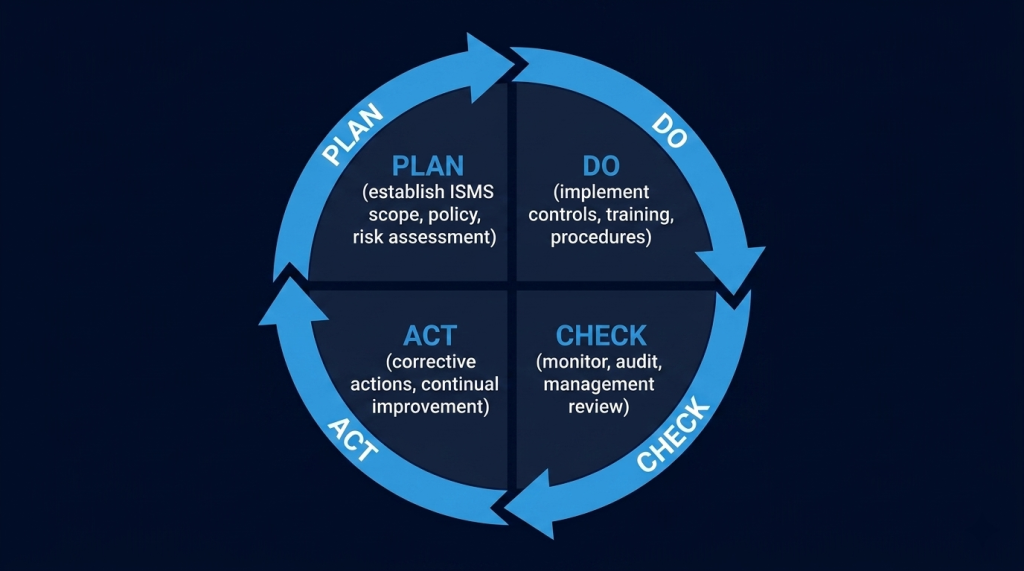
Understanding ISO 27001 — The 10 Clauses
| Clause | Title | What It Requires |
|---|---|---|
|
4 |
Context of the Organization |
Define internal/external issues, interested parties, ISMS scope |
|
5 |
Leadership |
Management commitment, security policy, roles and responsibilities |
|
6 |
Planning |
Risk assessment, risk treatment, security objectives |
|
7 |
Support |
Resources, competence, awareness, communication, documented information |
|
8 |
Operation |
Operational planning, risk treatment implementation |
|
9 |
Performance Evaluation |
Monitoring, measurement, internal audit, management review |
|
10 |
Improvement |
Nonconformity, corrective action, continual improvement |
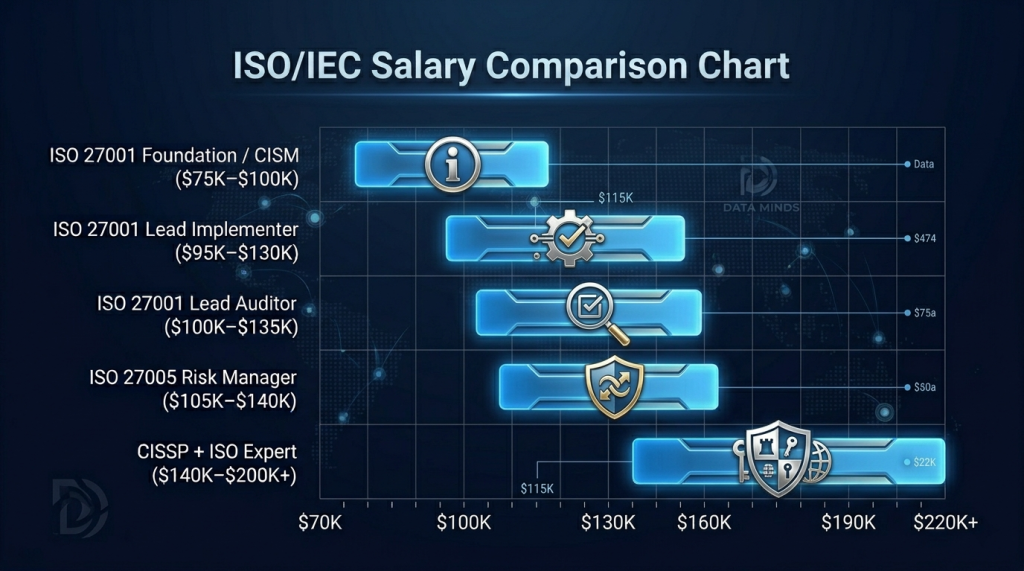
Career Opportunities
| Role | Target Job Titles | Average Salary (US) |
|---|---|---|
|
ISO 27001 Foundation / CISM |
Information Security Analyst, GRC Analyst |
$75,000 – $100,000 |
|
ISO 27001 Lead Implementer |
ISMS Consultant, Information Security Manager |
$95,000 – $130,000 |
|
ISO 27001 Lead Auditor |
Information Security Auditor, Compliance Manager |
$100,000 – $135,000 |
|
ISO 27005 Risk Manager |
Risk Manager, Chief Risk Officer (CRO track) |
$105,000 – $140,000 |
|
CISSP + ISO Expert |
CISO, VP of Security, Security Director |
$140,000 – $200,000+ |
Recommended Resources
Official Study Guides
- Official ISO standards store (27001, 27002, 27005, 22301)
- PECB — primary ISO certification body, training and exam registration
- BSI Group — UK-based ISO training and certification authority
- ISACA — CISM, CRISC — complementary governance certifications
- ISO 27001 Security — free implementation guides and templates
Where to Practice
── Hands-On Practice Platforms ──
- Blue Team Labs Online — security operations practice that complements ISO 27001 implementation
- TryHackMe — foundational security concepts that underpin ISO controls
How to Get Started
- Read ISO 27001:2022 before taking any course. The standard itself is 30 pages. Buy it from iso.org or read a certified summary. Before paying for Lead Implementer training, know what clauses 4–10 say.
- Map a real organization’s posture to Annex A controls. Take any organization you know and work through the 93 controls. Which exist? Which are missing? This gap analysis exercise teaches ISO 27001 faster than any course.
- Choose your track: Implementer or Auditor. Implementers build ISMS programs inside organizations. Auditors assess whether programs meet the standard. Pick based on whether you want to build or assess.
📌 Note: The information on this page — including certification details, exam codes, pricing, and salary ranges — is regularly reviewed and updated to reflect the latest data from official sources. Always verify current details directly with the relevant certification body or platform before making any decisions.
Community & Support
── ISO/IEC Communities ──
Related Articles
The 6 Learning Paths Every Cybersecurity Beginner Should Know
Affiliate Disclaimer: Some links in this article are affiliate links. This means if you click a link and make a purchase, SecVerse may earn a small commission — at no extra cost to you. We only recommend tools we genuinely believe in and that we consider useful for your cybersecurity learning journey. Our editorial opinions are never influenced by affiliate relationships. Introduction: **In our first guide**, we covered how to start learning cybersecurity without feeling overwhelmed. If you haven’t read it yet, start there. Now, let’s talk about which path to take once you’re ready. When I decided to get into cybersecurity 20 years ago after I graduated from school of engineering as computer engineer, I had no idea which path to take. I bought a CEH course first. Then I bought a Security+ book. Then I tried to learn networking. I was all over the place. Don’t be me.
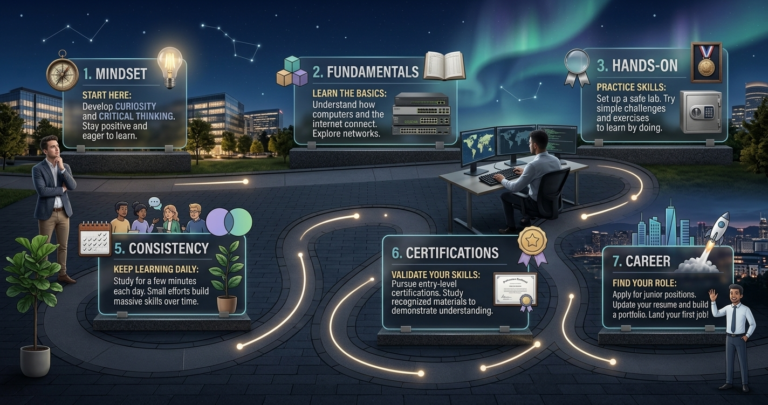
How to Start Learning Cybersecurity Without Feeling Overwhelmed
Affiliate Disclaimer: Some links in this article are affiliate links. This means if you click a link and make a purchase, SecVerse may earn a small commission — at no extra cost to you. We only recommend tools we genuinely believe in and that we consider useful for your cybersecurity learning journey. Our editorial opinions are never influenced by affiliate relationships. Introduction: The Overwhelm is Real (But Avoidable) Let’s be honest with ourselves to avoid the shock and be realistic. Cyber security is huge, branching, and massive field. When I decided to get and start in this field 20 years ago. I made every mistake imaginable: Bought expensive courses I never finished. Tried to learn everything at once – pentesting, malware analysis, cloud security, forensics. All in short time. Got trapped in “tutorial”- watching videos for hours but never actually doing anything because of not practicing them and being confused.