
Blue Team Labs Online (BTLO)

Home > Resources > Virtual Labs > Blue Team Labs Online (BTLO)
Real SOC Scenarios: Phishing Analysis, SIEM Triage, Malware Analysis, Digital Forensics, Threat Hunting
Blue Team Labs Online — Practice Defense the Way Defenders Actually Work

What is Blue Team Labs Online?

Blue Team Labs Online (BTLO) is the premier hands-on practice platform for defensive security. While most security platforms skew heavily toward offensive content, BTLO is built entirely around the skills that SOC analysts, incident responders, forensic analysts, and threat hunters need every day. Every lab simulates a real defensive scenario — a phishing email to investigate, a SIEM alert to triage, malware to analyze, or a compromised host to forensicate. BTLO aligns every challenge to the MITRE ATT&CK framework — you’re not just learning tools, you’re learning to think in the language the entire industry uses.

Is This Right for You?

This is for you if...

  • You’re studying for CySA+, BTL1, or working toward a SOC analyst role
  • You want hands-on practice with real SIEM, forensics, and malware analysis scenarios
  • You’ve done TryHackMe’s SOC Level 1 path and want deeper, less guided defensive scenarios
  • You want every lab mapped to MITRE ATT&CK so your learning connects to industry frameworks
  • You’re a developer or sysadmin moving into defensive security

This is NOT for you if...

  • You’re primarily interested in offensive security — HTB, PG, or TCM serve you better
  • You’re completely new to security with no networking or OS fundamentals — build those first
  • You expect the same volume of content as HTB — BTLO has fewer labs but higher quality per scenario

Lab Categories

Category What You Practice Tools Used ATT&CK Alignment
Phishing Analysis
Email header analysis, URL detonation, attachment analysis, IOC extraction
Any.run, VirusTotal, MXToolbox
T1566 — Phishing
Log Analysis
Windows Event Logs, Sysmon, authentication logs, firewall logs
Event Viewer, Splunk, ELK
Multiple tactics
SIEM — Splunk
Real Splunk environments, SPL queries, alert investigation
Splunk Enterprise
Detection across all ATT&CK tactics
Malware Analysis
Static and dynamic malware analysis, sandbox reports, IOC extraction
VirusTotal, PE-bear, Wireshark
T1059, T1055, T1105
Digital Forensics
Disk image analysis, memory forensics, timeline reconstruction
Autopsy, Volatility, FTK Imager
T1003, T1070
Threat Hunting
Hypothesis-driven hunting using logs and network data
Splunk, ELK, Zeek logs
Multiple TTPs
Incident Response
Full APT scenarios — initial alert to complete incident report
All of the above
Full ATT&CK kill chain
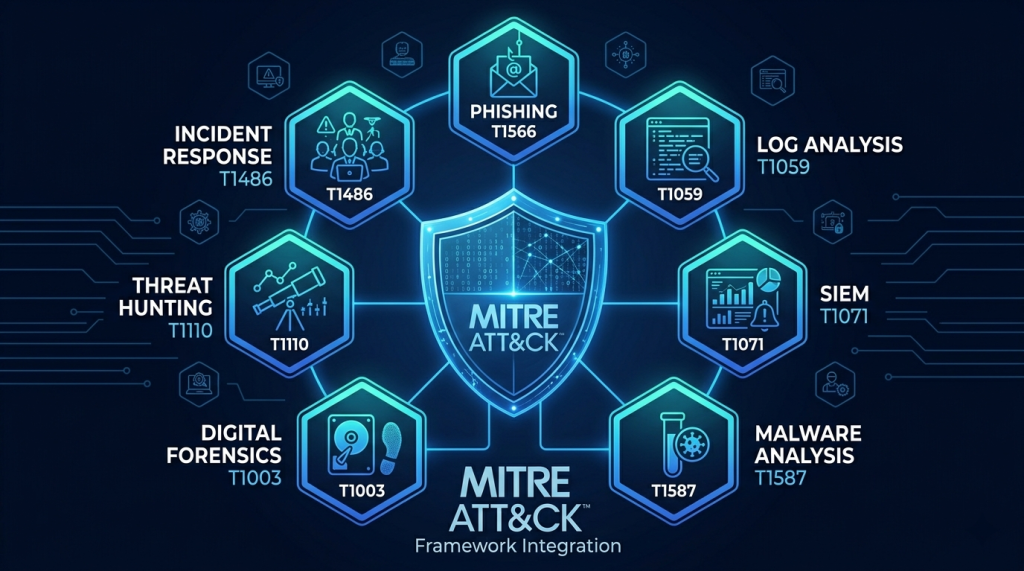
Seven Defensive Categories Mapped to MITRE ATT&CK: From Phishing Analysis to Full APT Incident Response
BTLO Lab Category Map

Pricing

Tier Price What's Included
Free
$0
Limited access to introductory investigations and challenges
Pro
$10/month
Full access to all labs, investigations, challenges, and new content
Team
Custom pricing
Multiple seats, admin dashboard, team progress tracking
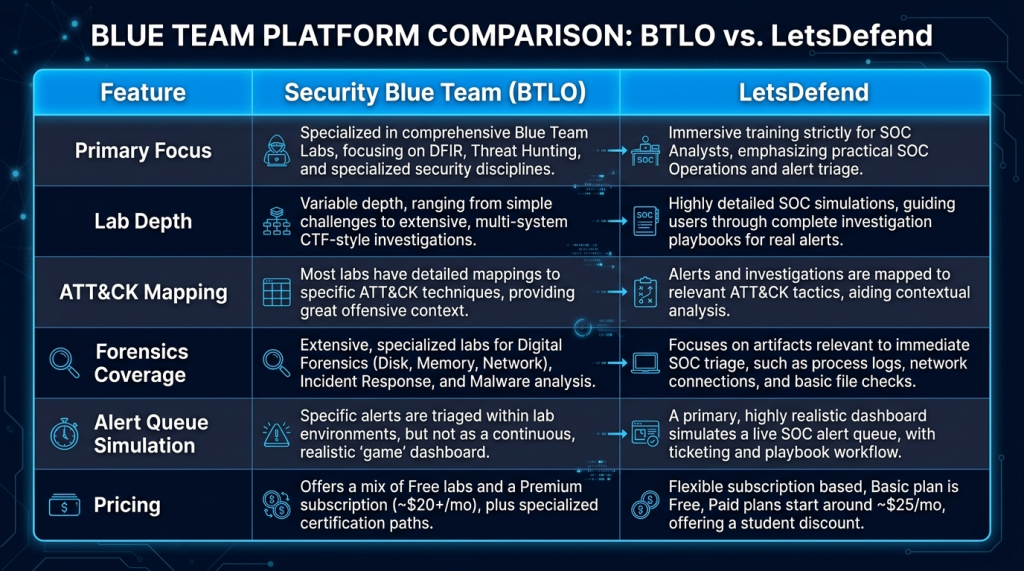
Deep Lab Scenarios (BTLO) vs Alert Queue Simulation (LetsDefend) — Two Platforms, One Complete SOC Skill Set
BTLO vs LetsDefend Platform Comparison

Certification Prep — What BTLO Helps With

Certification BTLO Categories That Help
BTL1 (Blue Team Level 1)
Phishing Analysis, SIEM, Log Analysis, Threat Hunting — direct alignment
CompTIA CySA+
SIEM, Threat Hunting, Incident Response — practical skills behind exam content
GCIH (GIAC Incident Handler)
Incident Response scenarios, Log Analysis, Digital Forensics
GCFA (GIAC Forensic Analyst)
Digital Forensics, Memory Analysis, Disk Forensics
Microsoft SC-200
SIEM Splunk → Microsoft Sentinel translation of skills
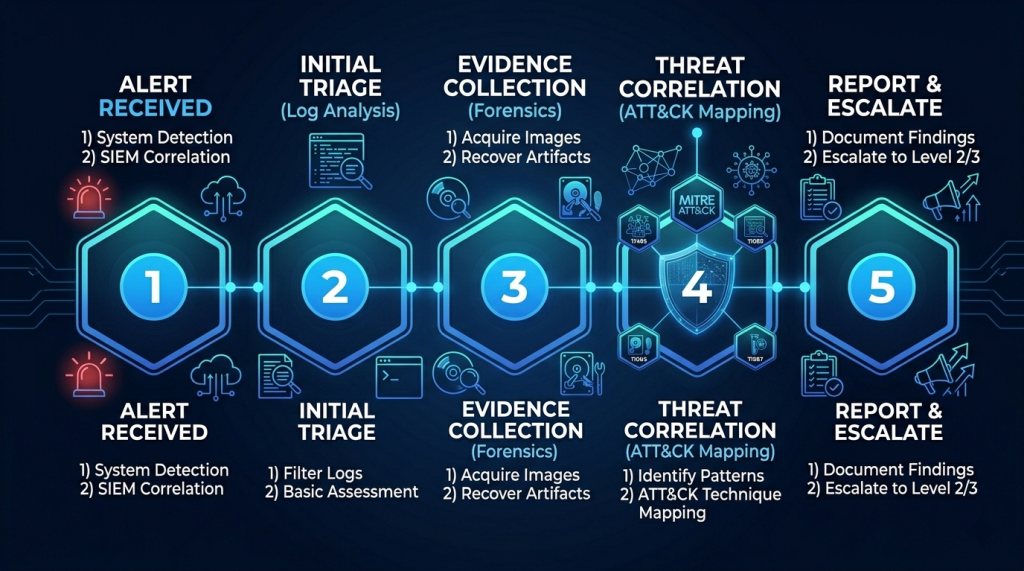
Alert Received → Initial Triage → Evidence Collection → ATT&CK Correlation → Document and Escalate
SOC Investigation Workflow

Recommended Resources

Official Study Guides

── SecVerse Marketplace — Resources ──

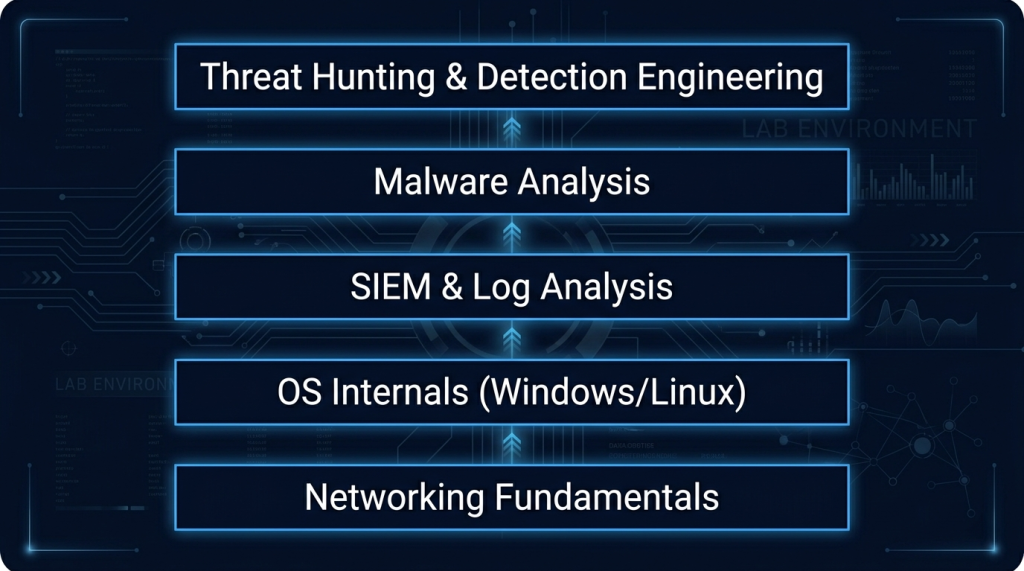
Networking Fundamentals → OS Internals → SIEM and Log Analysis → Malware Analysis → Threat Hunting
Blue Team Analyst Skill Stack

Which Platform is Right for You?

OverTheWire is the right choice when you are an absolute beginner who needs Linux command line confidence before anything else. Here is how it compares:

If you want... Best Choice
You want a real SOC alert queue simulation
LetsDefend — full alert triage and case management workflow
You want guided beginner defensive paths
TryHackMe SOC Level 1 — the starting point before BTLO
You want offensive practice alongside defense
Hack The Box — understand attackers to defend better
You want deep forensics, SIEM, and threat hunting labs mapped to ATT&CK
Blue Team Labs Online — this is the right choice

How to Get Started

  1. Install Splunk Free on your home machine first. Many BTLO labs use real Splunk environments. Spending two weeks with Splunk Free — importing logs, writing SPL queries — means you’re ready to investigate when you sit a BTLO lab.
  2. Start with Phishing Analysis — it’s the most approachable category. Phishing analysis requires no specialized tooling. You need a browser, VirusTotal, and MXToolbox. Complete 5 phishing labs before moving to SIEM or forensics.
  3. Treat every BTLO lab as a real incident report. Write up what you found, in what order, using what evidence, leading to what conclusion. This is exactly what BTL1 and GCIH certifications test.

📌 Note: The information on this page — including certification details, exam codes, pricing, and salary ranges — is regularly reviewed and updated to reflect the latest data from official sources. Always verify current details directly with the relevant certification body or platform before making any decisions.

Community & Support

Related Articles

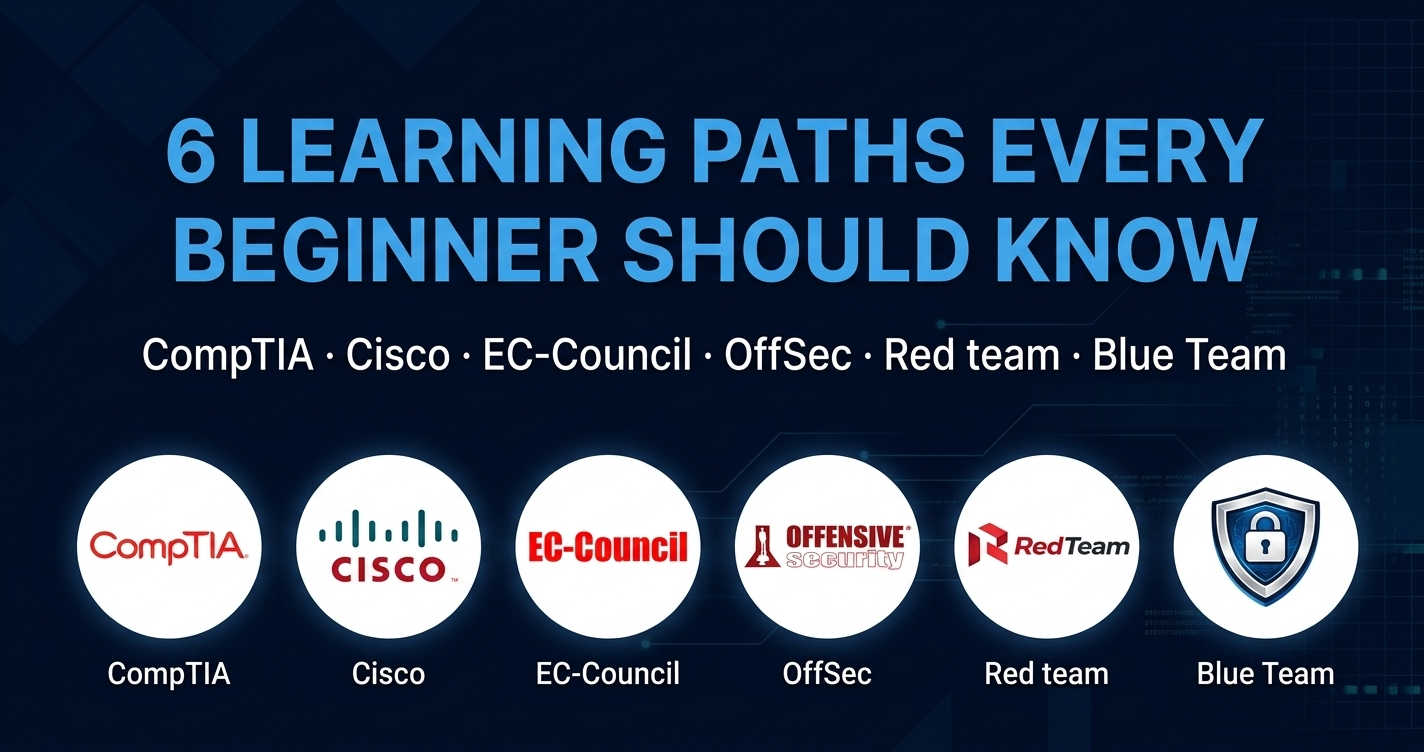
The 6 Learning Paths Every Cybersecurity Beginner Should Know

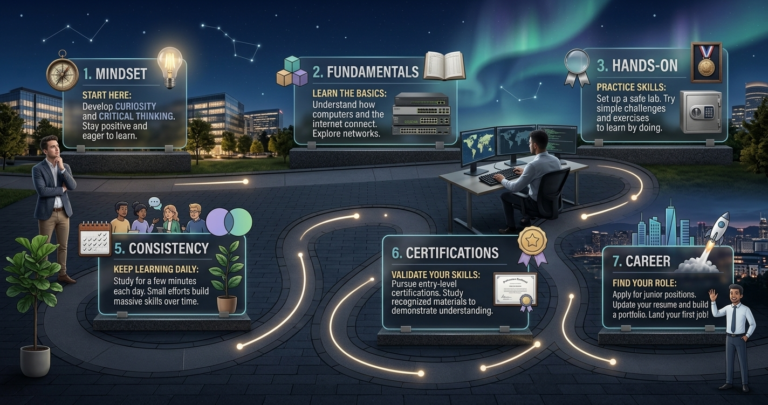
Affiliate Disclaimer: Some links in this article are affiliate links. This means if you click a link and make a purchase, SecVerse may earn a small commission — at no extra cost to you. We only recommend tools we genuinely believe in and that we consider useful for your cybersecurity learning journey. Our editorial opinions are never influenced by affiliate relationships. Introduction: **In our first guide**, we covered how to start learning cybersecurity without feeling overwhelmed. If you haven’t read it yet, start there. Now, let’s talk about which path to take once you’re ready. When I decided to get into cybersecurity 20 years ago after I graduated from school of engineering as computer engineer, I had no idea which path to take. I bought a CEH course first. Then I bought a Security+ book. Then I tried to learn networking. I was all over the place. Don’t be me.
Read More »

How to Start Learning Cybersecurity Without Feeling Overwhelmed

Affiliate Disclaimer: Some links in this article are affiliate links. This means if you click a link and make a purchase, SecVerse may earn a small commission — at no extra cost to you. We only recommend tools we genuinely believe in and that we consider useful for your cybersecurity learning journey. Our editorial opinions are never influenced by affiliate relationships. Introduction: The Overwhelm is Real (But Avoidable) Let’s be honest with ourselves to avoid the shock and be realistic. Cyber security is huge, branching, and massive field. When I decided to get and start in this field 20 years ago. I made every mistake imaginable: Bought expensive courses I never finished. Tried to learn everything at once – pentesting, malware analysis, cloud security, forensics. All in short time. Got trapped in “tutorial”- watching videos for hours but never actually doing anything because of not practicing them and being confused.

Read More »