What is Blue Teaming?
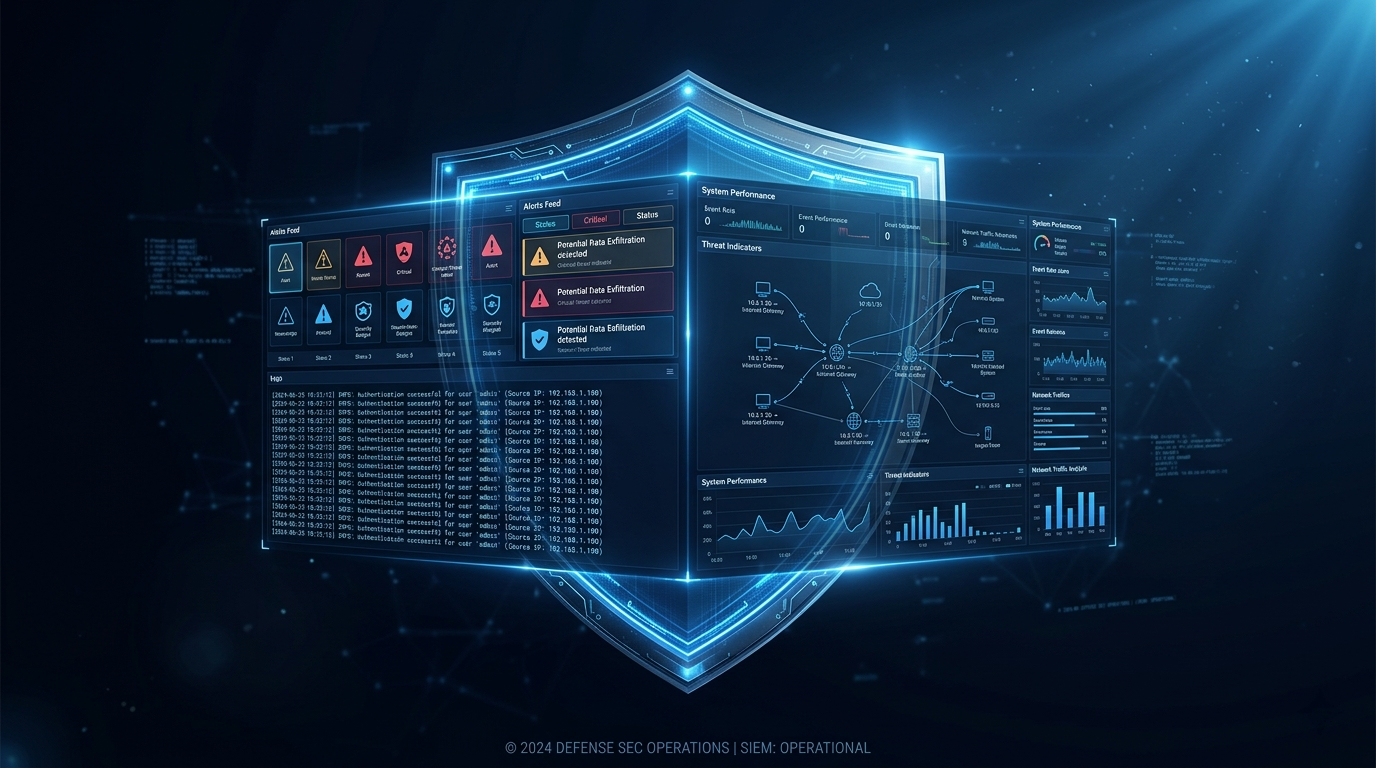
Blue Teaming is the comprehensive discipline of building, maintaining, and defending organizational security postures. The Blue Team Village defines it:
Blue teaming encompasses all defensive security operations, from proactive threat hunting and security monitoring to incident response and recovery. It’s the systematic application of security controls, detection engineering, and defensive strategies to protect against evolving threats.
And from MITRE’s D3FEND framework:
Modern blue teams have evolved from reactive incident responders to proactive defenders who use threat intelligence, security analytics, and automation to detect and prevent attacks before they cause damage.
If red teamers think like attackers, blue teamers think like architects — designing systems that catch what red teamers try.
Is This Right for You?
This is for you if...
- You want to work in a SOC, as a threat hunter, detection engineer, or incident responder
- You’re drawn to analysis, patterns, and understanding attacker behavior to build better defenses
- You want to work with SIEM platforms, EDR tools, threat intelligence, and forensics
- You prefer building and defending systems over attacking them
- You want career paths that scale from SOC Analyst to Security Architect
This is NOT for you if...
- You’re primarily interested in offensive security — the Red Team path fits better
- You want to avoid scripting and automation — detection engineering requires it
- You expect a purely passive role — modern blue teaming is proactive and deeply technical
Certification Roadmap
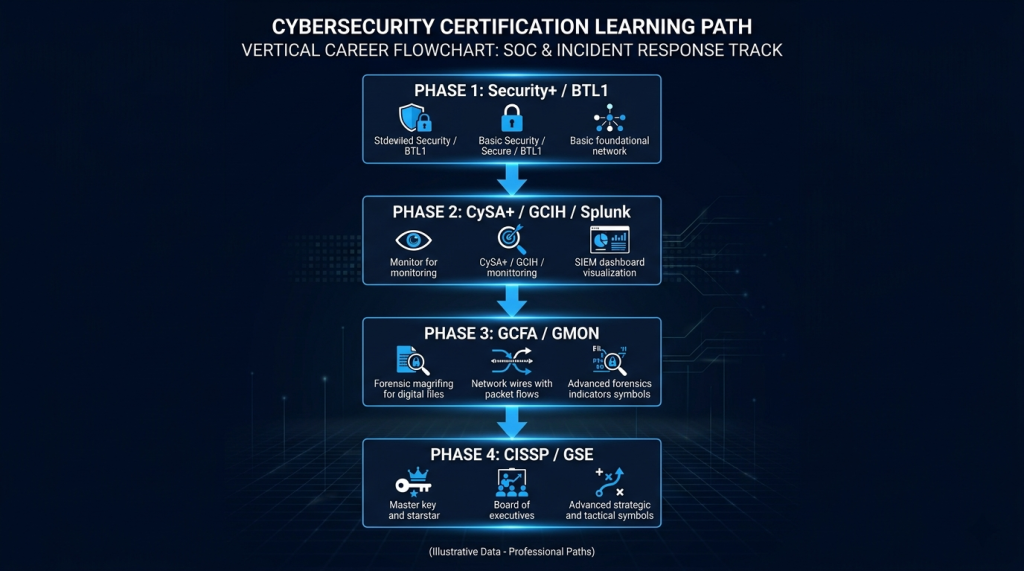
Phase 1 — Foundation (0–3 Months)
The Blue Team Village recommends:
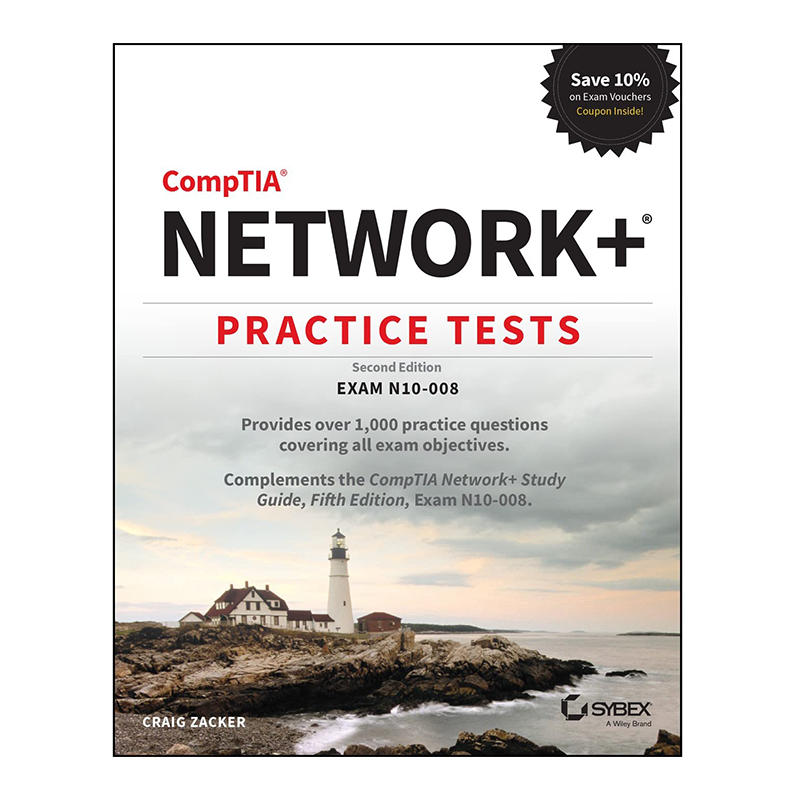
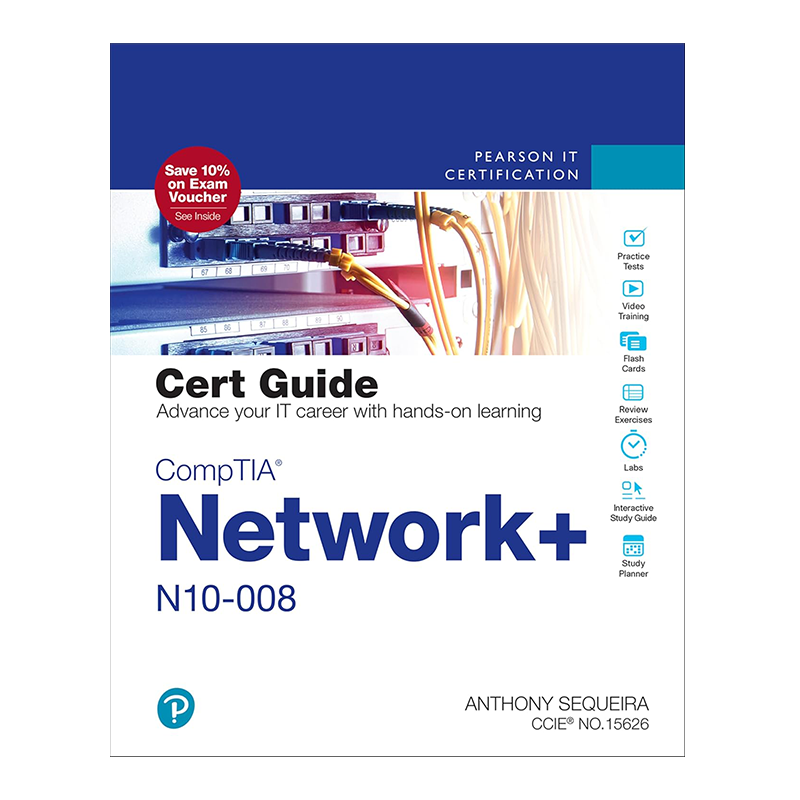
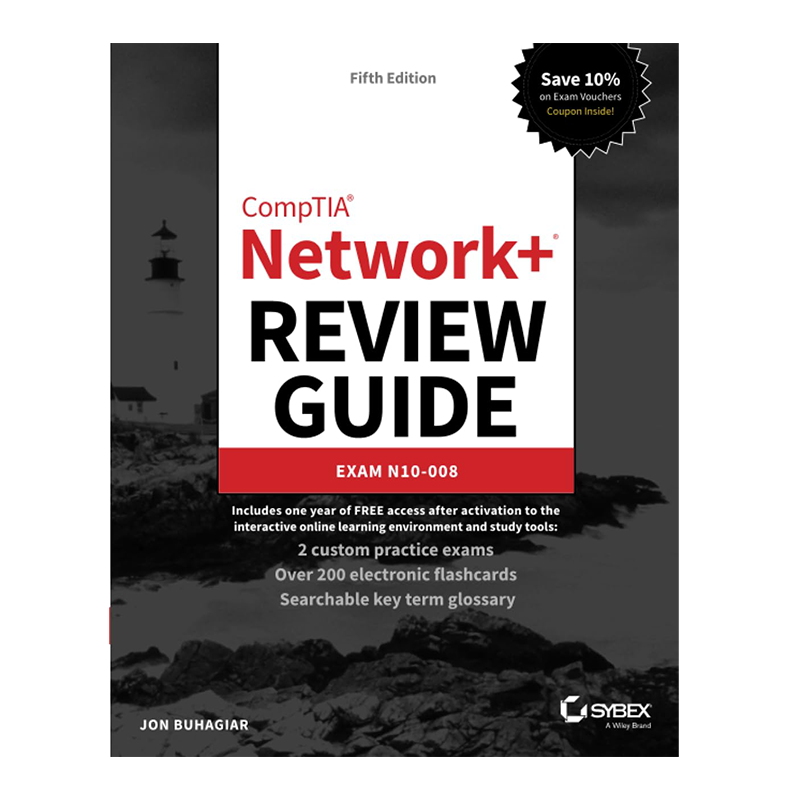
Begin with Security+ or equivalent foundational certification. This establishes the core security knowledge needed for all blue team operations.
| Certification | Provider | Focus | Exam Code |
|---|---|---|---|
|
CompTIA Security+ |
CompTIA |
Security fundamentals, DoD 8570 compliant |
SY0-701 |
|
BTL1 (Blue Team Level 1) |
Security Blue Team |
SOC skills: SIEM, phishing, log analysis, OSINT |
Practical |
|
Splunk Core Certified User |
Splunk |
SIEM fundamentals on the most-used enterprise platform |
SPLK-1001 |
Phase 2 — Security Operations (6–12 Months)
NIST’s incident handling framework defines the operational baseline:
Guidelines for incident handling, particularly for analyzing incident-related data and determining the appropriate response to each incident.
| Certification | Provider | Focus | Exam Code |
|---|---|---|---|
|
CySA+ |
CompTIA |
Threat detection, analysis, incident response |
CS0-003 |
|
GCIH (Incident Handler) |
SANS/GIAC |
Incident response, intrusion detection |
GCIH |
|
SC-200 |
Microsoft |
Microsoft Sentinel, Defender operations |
SC-200 |
|
Splunk Core Certified Admin |
Splunk |
Advanced SIEM administration |
SPLK-1003 |
Phase 3 — Detection Engineering & Forensics (12–24 Months)
From the Detection Engineering community:
Detection engineering is the practice of creating, testing, and maintaining detection logic to identify malicious activity — combining threat intelligence, data analysis, and security tool expertise.
| Certification | Provider | Focus |
|---|---|---|
|
GCFA (Forensic Analyst) |
SANS/GIAC |
Digital forensics and advanced incident response |
|
GMON (Defensive Operations) |
SANS/GIAC |
Continuous security monitoring and detection |
|
Elastic Certified Engineer |
Elastic |
Elastic Security SIEM engineering |
Phase 4 — Architecture & Leadership (24–36+ Months)
| Certification | Provider | Focus |
|---|---|---|
|
CISSP |
(ISC)² |
Security architecture, governance, management |
|
GSE (Security Expert) |
SANS/GIAC |
Comprehensive expert-level security operations |
|
CCSP |
(ISC)² |
Cloud security architecture |
Career Opportunities
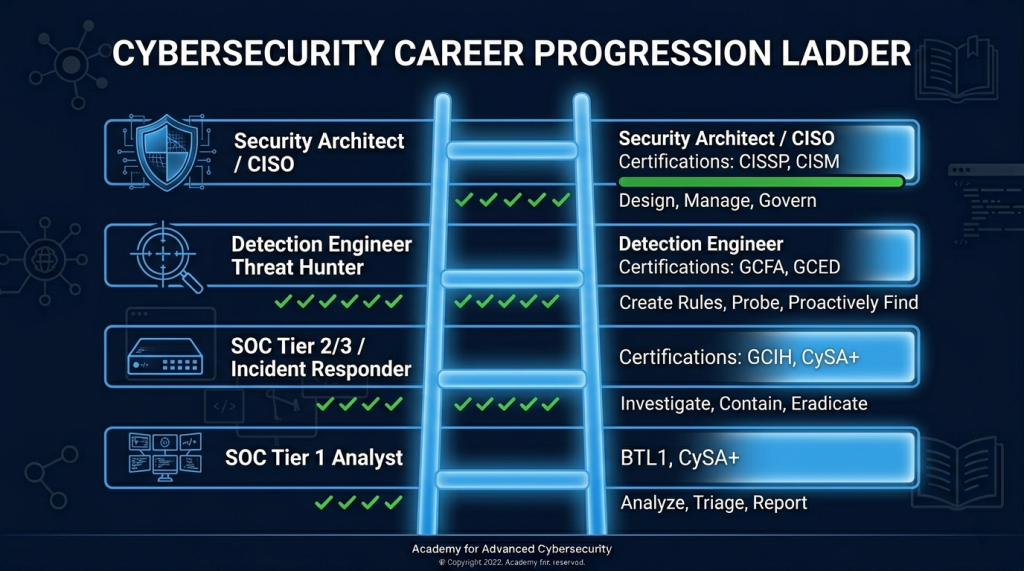
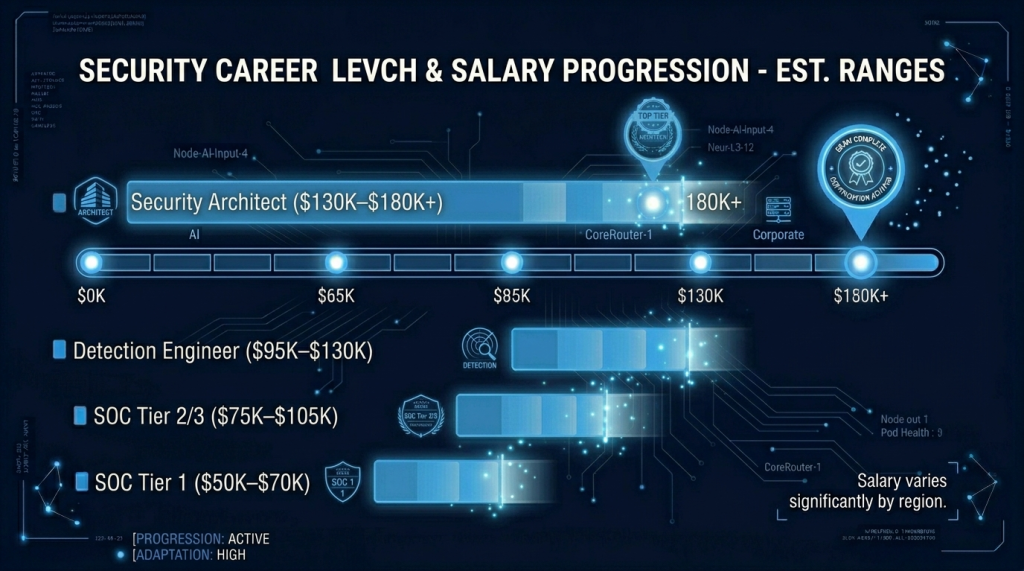
| Level | Target Job Titles | Average Salary (US) |
|---|---|---|
|
ASOC Tier 1 |
Alert Analyst, SOC Analyst Level 1 |
$50,000 – $70,000 |
|
SOC Tier 2/3 |
Senior SOC Analyst, Incident Responder, Threat Hunter |
$75,000 – $105,000 |
|
Detection Engineer |
Detection Engineer, Security Analytics Engineer |
$95,000 – $130,000 |
|
Security Architect |
Security Architect, CISO, Principal Security Engineer |
$130,000 – $180,000+ |
Recommended Resources
Official Study Guides
MITRE D3FEND is the defensive counterpart to ATT&CK:
D3FEND™ is a knowledge graph of cybersecurity defensive countermeasures — providing a standardized lexicon for defensive technology, complementing the MITRE ATT&CK framework.
- MITRE D3FEND — maps defenses to ATT&CK techniques
- NIST SP 800-61: Computer Security Incident Handling Guide — the IR bible
- CIS Critical Security Controls v8 — free, prioritized defense actions
- Sigma Rules — vendor-agnostic detection rule library
Where to Practice
── Hands-On Practice Platforms ──
- Blue Team Labs Online — SOC challenges: phishing, SIEM, forensics, threat hunting
- TryHackMe — SOC Level 1 path, excellent for beginners
- LetsDefend — SOC simulation platform with alert triage focus
- ARMO CTRL — cloud-native security simulation
How to Get Started
- Set up a home SIEM before studying for any cert. Download Security Onion or spin up Elastic free. Ingest logs. Write your first detection rule. Theory becomes permanent when you have hands-on context.
- Get Security+ and BTL1 together. Security+ gives vocabulary and DoD compliance. BTL1 gives SOC skills. Both within 3–4 months. They complement each other perfectly.
- Learn to write Sigma rules early. Vendor-agnostic detection syntax used by every mature SOC. Learning it early means you can write detections for any platform.
📌 Note: The information on this page — including certification details, exam codes, pricing, and salary ranges — is regularly reviewed and updated to reflect the latest data from official sources. Always verify current details directly with the relevant certification body or platform before making any decisions.
Community & Support
── Blue Team Communities ──
Related Articles
The 6 Learning Paths Every Cybersecurity Beginner Should Know
**In our first guide**, we covered how to start learning cybersecurity without feeling overwhelmed. If you haven’t read it yet, start there.
Now, let’s talk about which path to take once you’re ready. When I decided to get into cybersecurity 20 years ago after I graduated from school of engineering as computer engineer, I had no idea which path to take.
I bought a CEH course first. Then I bought a Security+ book. Then I tried to learn networking. I was all over the place. Don’t be me.
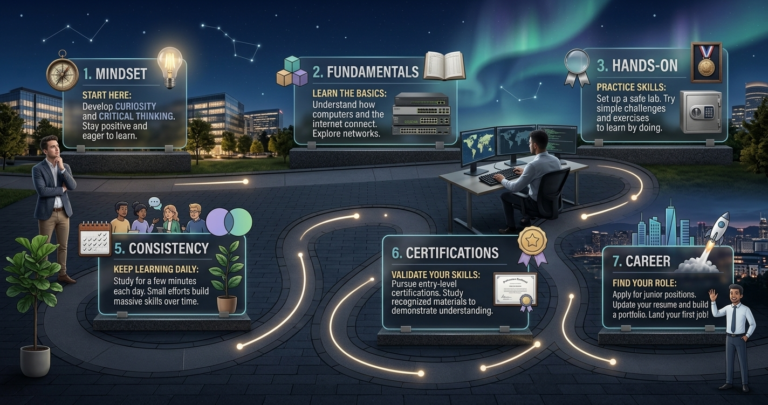
How to Start Learning Cybersecurity Without Feeling Overwhelmed
Let’s be honest with ourselves to avoid the shock and be realistic. Cyber security is huge, branching, and massive field.
When I decided to get and start in this field 20 years ago. I made every mistake imaginable:
Bought expensive courses I never finished.
Tried to learn everything at once – pentesting, malware analysis, cloud security, forensics. All in short time.
Got trapped in “tutorial”- watching videos for hours but never actually doing anything because of not practicing them and being confused.
Got lots and different opinions from people who are in advanced levels.
Here’s the truth I wish someone told me earlier: