What is CompTIA?
CompTIA — the Computing Technology Industry Association — is the universal starting point for millions of IT professionals worldwide, and the only major certification body that stays completely vendor-neutral. Founded in 1982, CompTIA has certified over 3.5 million professionals globally. Their certifications carry U.S. Department of Defense approval, holding real weight in government, military, and enterprise environments. CompTIA describes their mission clearly:
Our certifications are developed by IT professionals, ensuring they reflect the skills employers need. They are vendor-neutral, industry-recognized credentials that validate foundational IT skills across various domains.
If you’re building a security career and want employers to take your resume seriously from day one — CompTIA is where most people start. And for good reason.
Is This Right for You?
This is for you if...
- You’re new to cybersecurity and want a structured, vendor-neutral starting point
- You need DoD 8570 / 8140 compliance for government or defense contractor roles
- You want globally recognized credentials that open doors at enterprise employers
- You’re transitioning from IT support, networking, or a non-tech background
- You prefer learning concepts before committing to a specific vendor’s ecosystem
You want certifications that pair well with hands-on lab practice
This is NOT for you if...
- You already have 3+ years of security experience — the early certs will feel too broad
- You want deep offensive security skills fast — OSCP or CEH tracks move faster toward that
- You’re looking for vendor-specific certs to manage Cisco or Palo Alto environments
- You want certs that never expire — CompTIA requires renewal every 3 years
Certification Roadmap
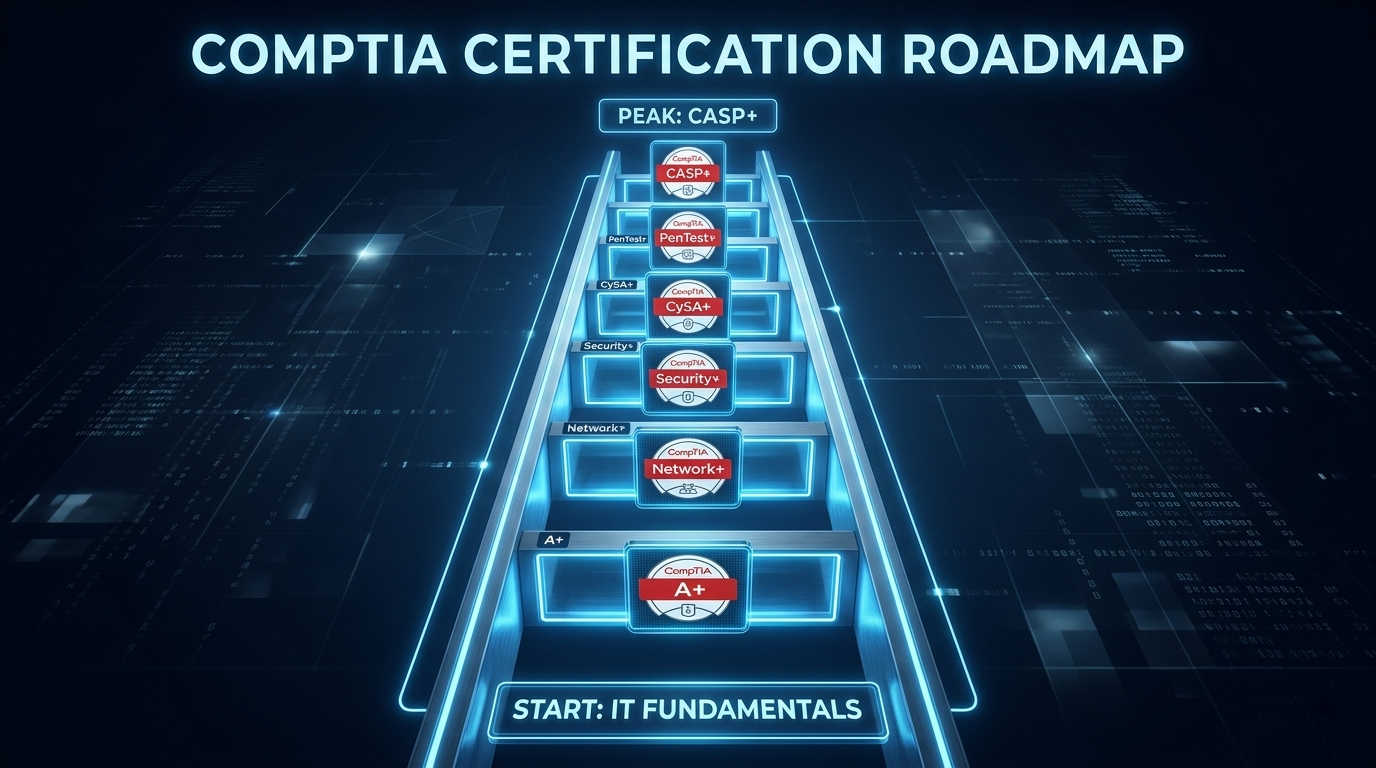
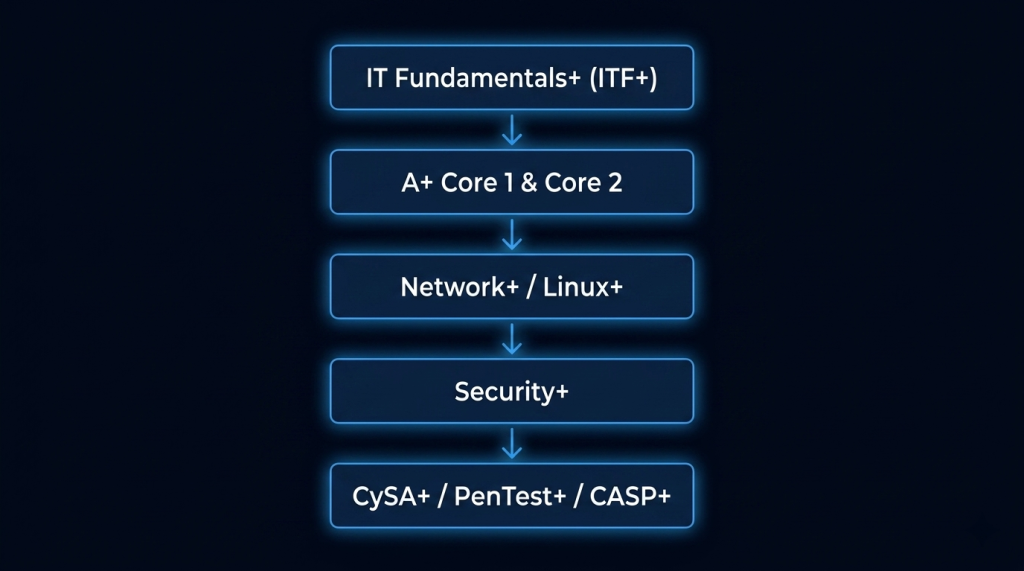
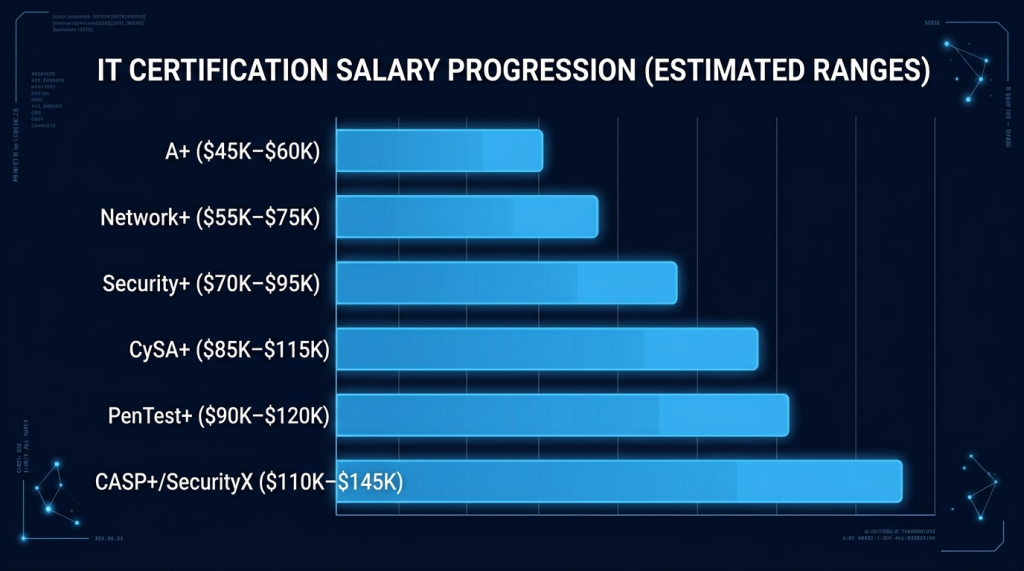
CompTIA structures its certs into clear tiers. Here’s the full path from zero to advanced:
Phase 1 — Foundation (0–3 Months)
CompTIA ITF+ is the optional entry point for people with zero IT background:
ITF+ establishes an IT education framework for students in secondary and post-secondary settings and individuals considering a career change.
Skip it if you already work in IT. Take it if you’re starting from absolute scratch.
Phase 2 — IT Core Skills (3–6 Months)
CompTIA A+ is the industry’s most recognized entry-level IT credential, split into two exams:
A+ is the industry standard for launching IT careers into today’s digital world — the only industry-recognized credential with performance testing to prove pros can think on their feet
Phase 3 — Networking & Systems (6–9 Months)
Network+ covers the networking knowledge every security professional needs:
Network+ helps develop a career in IT infrastructure covering troubleshooting, configuring, and managing networks.
Phase 4 — Security Core (9–12 Months)
Security+ is the most widely recognized entry-level security certification in the world:
Security+ is the first security certification IT professionals should earn. It establishes the core knowledge required of any cybersecurity role and provides a springboard to intermediate-level cybersecurity jobs.
If you only get one CompTIA cert, get this one. DoD 8570 requires it for most entry-level government security roles.
Phase 5 — Advanced Specializations (12–18+ Months)
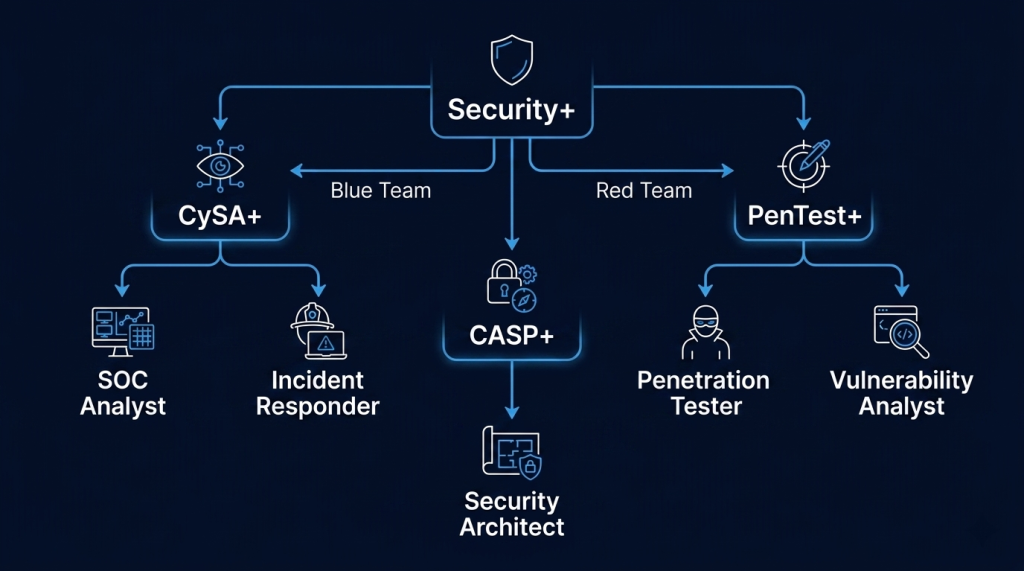
After Security+ you have three directions:
CASP+ — now rebranded as SecurityX — is the expert-level credential for security architects:
CASP+ is the only hands-on, performance-based certification for practitioners — not managers — at the advanced skill level of cybersecurity.
CompTIA also runs a stackable certification system:
“When you earn a CompTIA certification, it never stands alone. As you accumulate more certifications, you automatically earn stackable credentials that reflect your growing expertise.”
Career Opportunities
Recommended Resources
Official Study Guides
CompTIA describes their official guides as:
Rigorously evaluated by third-party subject matter experts to validate adequate coverage of the exam objectives — your comprehensive roadmap to success.
Where to Practice
── Hands-On Practice Platforms ──
How to Get Started
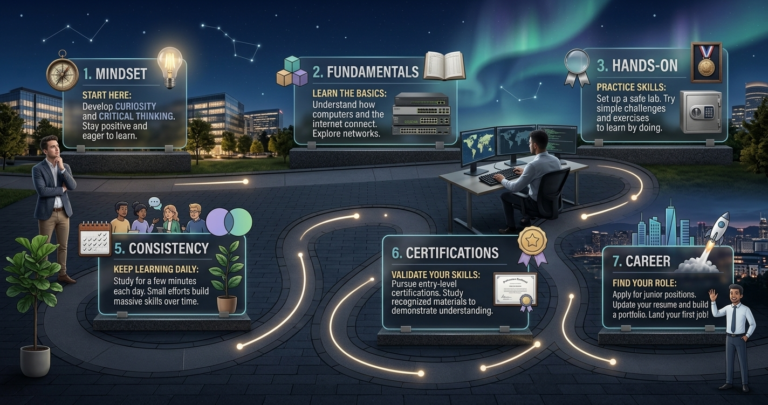
- Choose your entry point. Already work in IT? Start with Security+. Completely new? Begin with A+ or ITF+. Be honest about where you are — not where you want to be.
- Study consistently, not intensely. An hour a day beats a 10-hour weekend session. CompTIA exams reward breadth — cover a lot of ground without burning out.
- Practice with your hands. CompTIA exams include performance-based questions. Use TryHackMe, CertMaster Labs, or build a home lab. Reading about security is good. Doing security is better.
📌 Note: The information on this page — including certification details, exam codes, pricing, and salary ranges — is regularly reviewed and updated to reflect the latest data from official sources. Always verify current details directly with the relevant certification body or platform before making any decisions.
Community & Support
── CompTIA Communities ──