

Affiliate Disclaimer: Some links in this article are affiliate links. This means if you click a link and make a purchase, SecVerse may earn a small commission — at no extra cost to you. We only recommend tools we genuinely believe in and that we consider useful for your cybersecurity learning journey. Our editorial opinions are never influenced by affiliate relationships.
Introduction: The Overwhelm is Real (But Avoidable)
Let’s be honest with ourselves to avoid the shock and be realistic. Cyber security is huge, branching, and massive field.
When I decided to get and start in this field 20 years ago. I made every mistake imaginable:
- Bought expensive courses I never finished.
- Tried to learn everything at once – pentesting, malware analysis, cloud security, forensics. All in short time.
- Got trapped in “tutorial”- watching videos for hours but never actually doing anything because of not practicing them and being confused.
- Got lots and different opinions from people who are in advanced levels.
Here’s the truth I wish someone told me earlier:
You don’t need to know everything to start.
This guide comes from real experience. What worked. What failed. And what I’ve seen work for hundreds of beginners I’ve mentored over the years.

Step 1: Start with the Right Mindset (The Most Overlooked Step)
Mistake #1: Thinking You Need to Be a "Hacker" on Day One
Reality check: Cybersecurity is not just about breaking into systems. That’s a tiny fraction.
Here’s what the field actually includes:
- Defense – protecting systems, detecting threats
- Compliance – GDPR, HIPAA, ISO 27001
- Risk management – finding vulnerabilities before attackers do
- Incident response – handling breaches when they happen
Actionable Tip: Pick one area that excites you. Ignore the rest for now. Love puzzles? Try digital forensics. Enjoy coding? Explore secure development. Hate coding? Focus on GRC (governance, risk, compliance).
Mistake #2: Comparing Yourself to "Experts"
Reality check: Even senior professionals Google basic commands daily.
What I still forget after 10+ years:
- The exact syntax for nmap scans.
- How to configure a firewall rule without checking the docs.
- The difference between AES-128 and AES-256 (yes, really).
Actionable Tip: Follow real practitioners, not just “gurus.” Watch them admit mistakes. See them learn in public.
Recommended follows:
- @SwiftOnSecurity – practical security advice
- @TheCyberMentor – hands-on learning
- @DanielMiessler – strategic security insights
Step 2: Build a Foundation (Without Drowning in Theory)
What You Actually Need to Learn First
| Topic | Why It Matters | How to Learn It (Without Overwhelm) |
|---|---|---|
|
Networking Basics |
Most attacks exploit network flaws. |
|
|
Linux Command Line |
80% of security tools run on Linux. |
|
|
Windows Fundamentals |
Most corporate environments use Windows. |
|
|
Basic Scripting (Python/Bash) |
Automates repetitive tasks. |
|
|
How the Web Works |
Understand HTTP/HTTPS, cookies, headers, APIs |
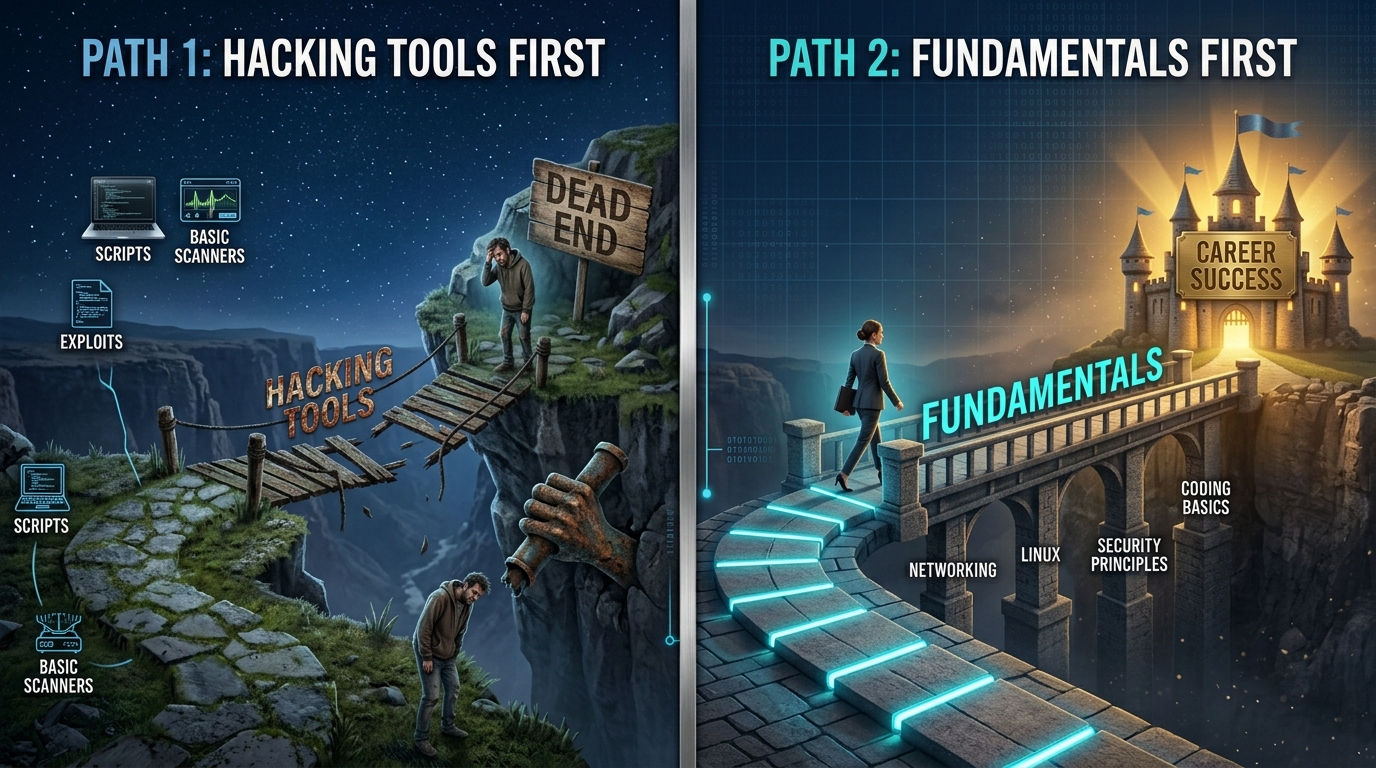
Mistake #3: Jumping Straight into Hacking Without Understanding the Building Blocks
Reality check: You can’t hack what you don’t understand.
What happens when you skip fundamentals?
- You’ll run sqlmap but have no clue why SQL injection works.
- You’ll use Metasploit but can’t customize a simple exploit.
- You’ll get stuck in CTF challenges because you lack basic Linux skills.
- You’ll copy-paste Python scripts without understanding what they do.
Actionable Tip: Spend 2-4 weeks (depending on your time) on fundamentals before touching hacking tools.
- Variables (store data)
- Loops (repeat actions)
- Conditionals (if/else logic)
- Functions (reusable code blocks)
You don’t need to be a developer. Just learn these 4 concepts.
That’s it. 80% of what you’ll need.
Free resources to start:
- NetworkChuck’s “How to Get Into Cybersecurity” (YouTube)
- Professor Messer’s CompTIA Network+ (free video course)
- Automate the Boring Stuff with Python (free book – read first 5 chapters)
For deeper structured guidance, explore our complete learning paths covering CompTIA, Cisco, EC-Council, Offensive Security, Red Team, and Blue Team.
Step 3: Hands-On Learning (The Only Way That Actually Works)
Mistake #4: Only Watching Videos Without Doing
Reality check: You don’t learn by watching. You learn by doing.
My biggest failure? In my first year, I watched over 100 hours of hacking tutorials. Then realized I couldn’t even set up a simple virtual machine.
How to Get Hands-On (Without Breaking the Bank)
| Method | What It Is | Affiliate Links (If You Want to Invest) |
|---|---|---|
|
Virtual Labs |
Safe environments to practice hacking. |
Free – paid tiers available |
|
Capture The Flag (CTF) |
Hacking challenges with real-world scenarios. |
Free |
|
Homelab |
Your own mini cybersecurity lab. |
$35+ (Raspberry Pi) |
|
Bug Bounty |
Earn money by finding vulnerabilities. |
Free to join |
Affiliate Recommendation: Start with TryHackMe’s free tier – it’s beginner-friendly and requires no setup.
Mistake #5: Trying to Learn Everything at Once
Reality check: Cybersecurity has dozens of specializations. You cannot master them all simultaneously.
What I did wrong: I tried to learn pentesting, malware analysis, and cloud security at the same time. Result? Burnout in three months.
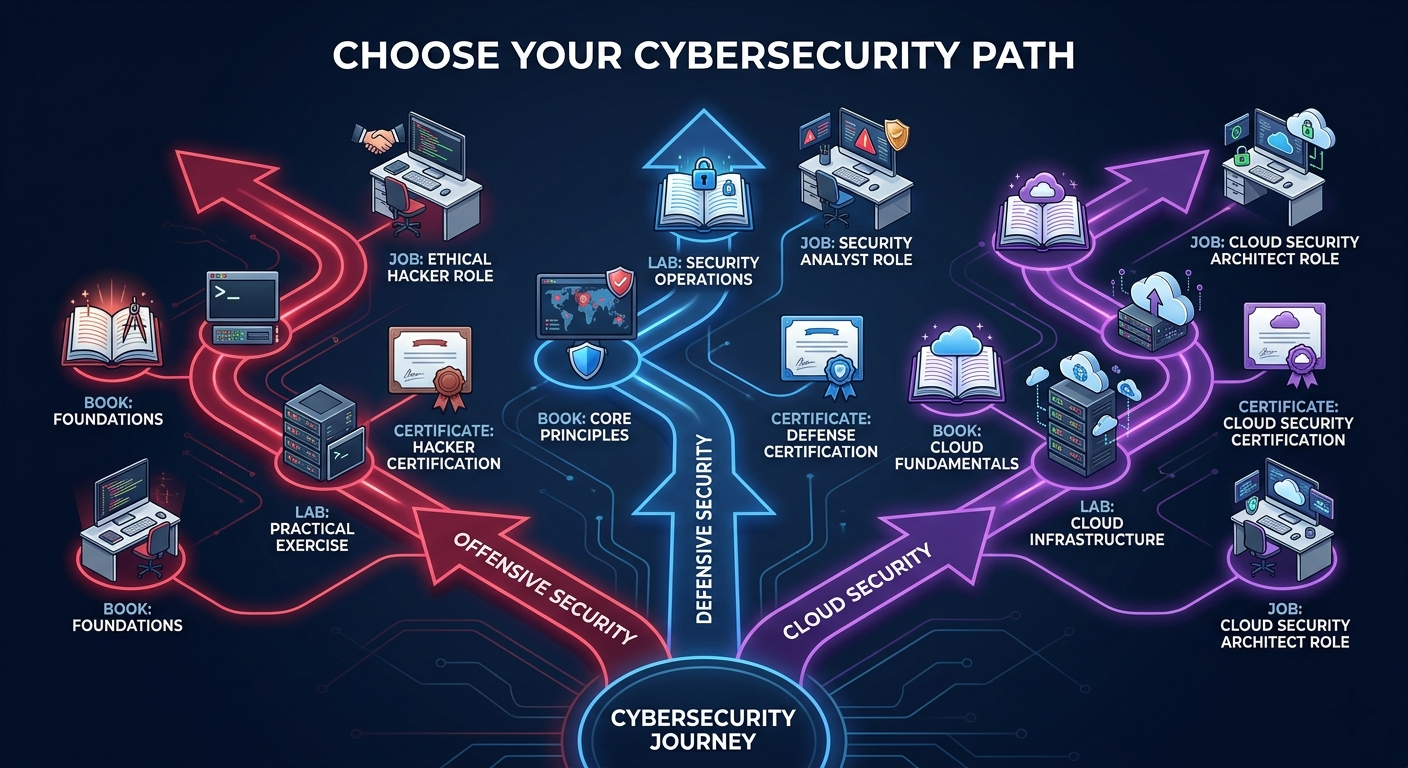
Actionable Tip: Pick one path. Stick with it for 3-6 months (take your time with it) before exploring others.
Example Learning Paths:
- Offensive Security (Hacking): TryHackMe → Hack The Box → OSCP
- Defensive Security (Blue Team): TryHackMe SOC Path → Splunk Fundamentals → CySA+
- Cloud Security: AWS/Azure Fundamentals → CCSK
Browse all virtual lab platforms to find the right fit for your skill level.
Step 4: Join the Community (Don't Learn Alone)
Mistake #6: Trying to Learn in Isolation
Reality check: Cybersecurity is a team sport. You need mentors, peers, and accountability partners. The more you ask and discuss issues things become clear to you.
What I wish I knew earlier: The best resource isn’t a course or a book. It’s other humans learning alongside you.
Free communities to join:
- r/cybersecurity on Reddit
- The Cyber Mentor’s Discord
- Local OWASP or Def Con groups
Actionable Tip: Join at least one community. Ask one question per week. Share one win per week.
Our community page lists 30+ trusted cybersecurity communities to help you connect.
Step 5: Avoid Burnout (The Silent Killer of Learning)
Mistake #7: Grinding 10 Hours a Day
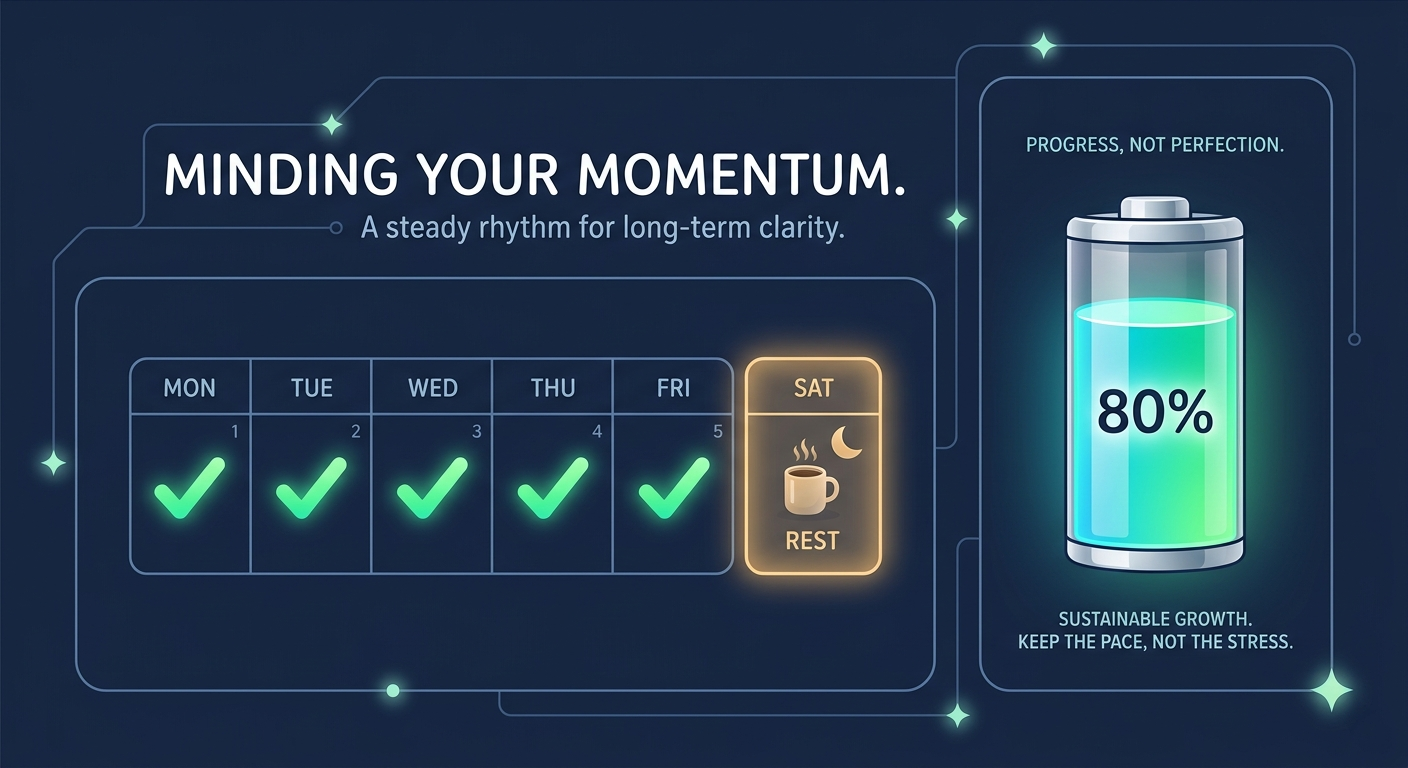
Reality check: Consistency beats intensity. Always.
What I learned the hard way:
- Studying 2 hours daily beats 14 hours every Saturday.
- Sleep is part of learning. Your brain consolidates knowledge while you rest.
How to Stay Consistent (Without Burning Out)
✅ Set a sustainable pace – 1 hour per day, Ensure consistency – either 5 on/2 off or 7-day week.
✅ Track your progress – use a simple spreadsheet for labs completed.
✅ Celebrate small wins – “I solved my first CTF challenge!”
✅ Take real breaks – Pomodoro technique: 25 minutes study, 5 minutes rest.
Affiliate Recommendation: Read “Atomic Habits” by James Clear – the best book on building sustainable learning habits. Shop on Amazon.
Step 6: Get Certified (But Not Too Early)
Mistake #8: Chasing Certificates Before Skills
Reality check: Certifications don’t make you a hacker. They validate what you already know.
What I did wrong: I earned Security+ before I could explain how TCP/IP handshakes work.
When to Get Certified?
| Certification | When to Take It |
|---|---|
|
CompTIA Security+ |
After 3-6 months of hands-on learning. |
|
Certified Ethical Hacker (CEH) |
After completing TryHackMe and HTB basics |
|
Offensive Security Certified Professional (OSCP) |
After 6-12 months of dedicated pentesting practice |
Actionable Tip: Only pursue certification if:
- You can explain concepts without memorizing answers.
- You’ve applied the knowledge in labs or CTFs.
- You need it for a specific job (not just for “clout”).
Explore our certification learning paths for detailed roadmaps on each credential.
Step 7: Land Your First Job (Without a Degree)
Mistake #9: Thinking You Need a University Degree
Reality check: Skills matter more than degrees in cybersecurity.
How I landed my first job without a degree:
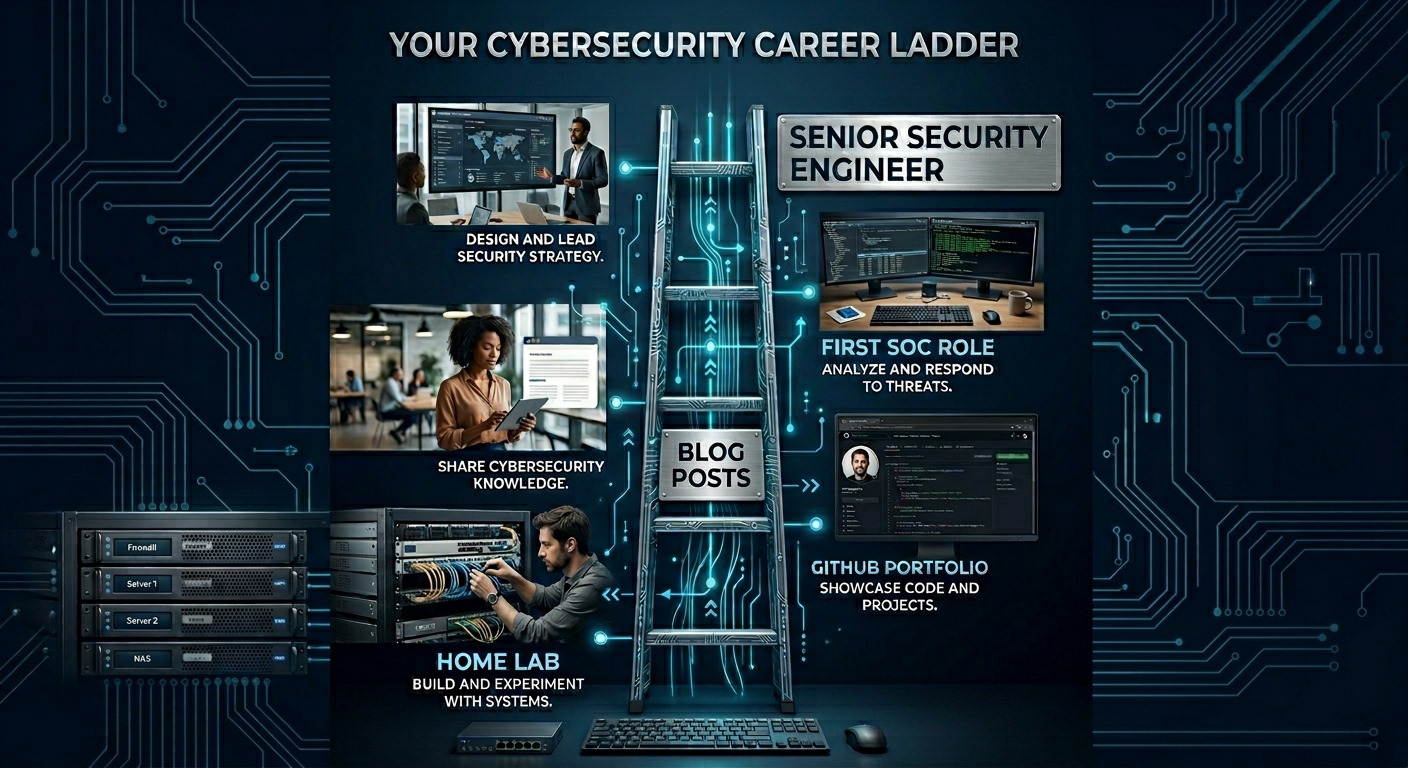
- Built a home lab – documented everything on GitHub.
- Wrote blog posts – “How I Solved X CTF Challenge.”
- Networked – attended local Def Con meetups.
- Applied for SOC Analyst roles – entry-level, not senior.
How to Get Your First Job (Step-by-Step)
| Step | Action |
|---|---|
|
1 |
Build a portfolio (GitHub, blog, lab write-ups) |
|
2 |
Get a free certification (Google Cybersecurity Certificate) |
|
3 |
Apply for internships or SOC roles – unpaid first if needed |
|
4 |
Network relentlessly – LinkedIn, local meetups, conferences |
Affiliate Recommendation: TCM Security’s Practical Ethical Hacking course – best for job-ready skills.
For hands-on practice, check our hardware security tools guide to build your own testing lab.
Final Thoughts: You Don't Need to Know Everything
Cybersecurity is a journey. Not a sprint.
The field evolves constantly. Your ability to learn how to learn matters more than any single fact or tool.
My biggest lesson after 10+ years?
- You will never know everything. And that’s perfectly fine.
- The best professionals are the ones who keep learning – not the ones who claim to know it all.
- Your first job won’t be your last. Career growth is normal. Embrace it.
- Your mistakes are your experiences.
- Note all your tests, problems and their solutions for future reference.
You are ready. Start today. One small step at a time.

Further Reading & Resources
Free Resources
- OWASP Top 10 – Web security vulnerabilities
- MITRE ATT&CK Framework – Adversary tactics and techniques
- CISA Cybersecurity Resources – Government resources
Paid (But Worth It) Affiliate Links
| Category | Product | Link |
|---|---|---|
|
Books |
The Web Application Hacker’s Handbook |
|
|
Books |
Hacking: The Art of Exploitation |
|
|
Hardware |
Hak5 WiFi Pineapple |
|
|
Courses |
Practical Ethical Hacking (TCM Security) |
|
|
Courses |
TryHackMe Pro Subscription |
**What’s Next?**
Now that you know how to start, it’s time to choose your direction.
Read our next guide: **”The 6 Learning Paths Every Cybersecurity Beginner Should Know”** – where we break down CompTIA, Cisco, EC-Council, Offensive Security, Red Team, and Blue Team.
“This article contains affiliate links. See our full disclaimer policy.”