


Affiliate Disclaimer: Some links in this article are affiliate links. This means if you click a link and make a purchase, SecVerse may earn a small commission — at no extra cost to you. We only recommend tools we genuinely believe in and that we consider useful for your cybersecurity learning journey. Our editorial opinions are never influenced by affiliate relationships.
Introduction :
What is cybersecurity? It is the practice of understanding how systems work — and using that understanding to protect them, attack them, or investigate what happened when they failed.
I remember the first time I realized I was inside a system I had no business being inside.
I was not using sophisticated tools. I was not running scripts. I was asking the right questions at the right moment — and the system answered. That was the day I understood what cybersecurity actually was. Not firewalls and antivirus. A discipline built on understanding how things work — and how they break.
I built SecVerse because when I started, there was no single place that explained everything clearly and honestly. This article is the beginning.
What Is Cybersecurity, Actually?
“Cybersecurity is the practice of understanding how systems work — and using that understanding to protect them, attack them, or investigate what happened when someone else attacked them first.”
Three Disciplines — Which One Are You?
| Discipline | What They Do | Mindset | Example Roles |
|---|---|---|---|
Offensive Security |
Find vulnerabilities before attackers. |
Curious, persistent, creative. |
Pen Tester, Red Teamer, Bug Bounty |
Defensive Security |
Detect, respond, prevent. |
Methodical, analytical. |
SOC Analyst, IR, Threat Hunter |
Governance, Risk & Compliance |
Ensure standards are met. |
Structured, bridges tech and business. |
GRC Analyst, CISO, ISO Auditor |
Why Right Now Is the Best Time
There are currently more than 3.5 million unfilled cybersecurity positions worldwide. Every company that connects to the internet needs people who understand how to protect that connection.
“It is not about how many certifications you get. It is about how many problems you faced, how you dealt with them, planned and solved them.”
The Three Foundations You Cannot Skip
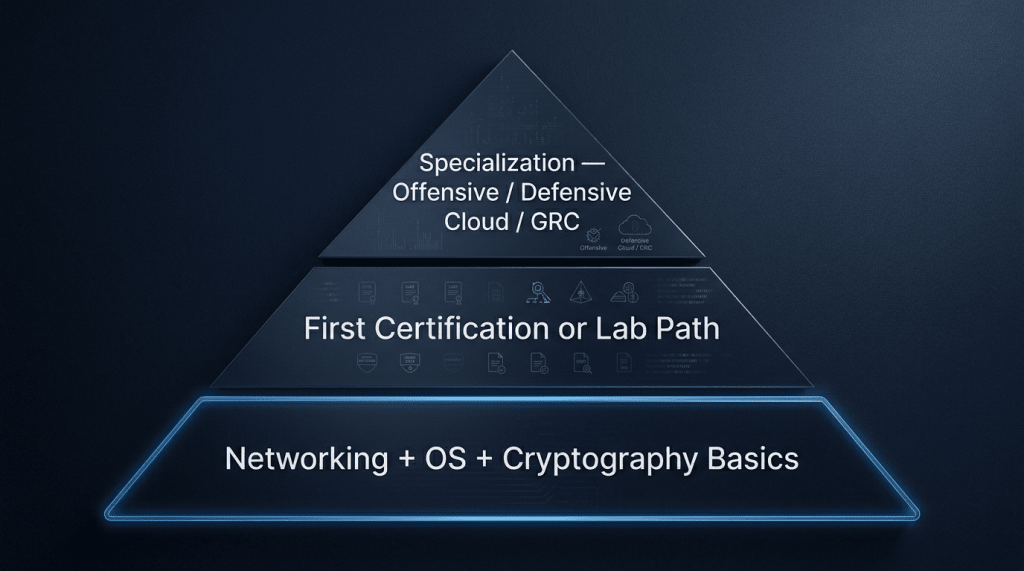
| Foundation | What to Learn | Why |
|---|---|---|
Networking |
TCP/IP, OSI, subnets, DNS, HTTP/S, firewalls |
Every attack and defense happens over a network. |
Operating Systems |
Linux CLI, Windows internals, file systems |
Tools run on OS. Exploits target them. |
Cryptography |
Encryption, hashing, TLS/SSL, PKI |
Encryption is everywhere. Knowing it means knowing where it breaks. |
My Experience — What I Wish I Knew at the Start
I started working during my second year of university — maintenance, networking, cameras, physical security. Building skills without a roadmap.
An advisor told me: start with CompTIA, build the foundation, then specialize. So I did. CompTIA to Cisco to EC-Council. Then a Master’s in Information Security Engineering.
- The foundation is not the boring part. It IS the skill.
- Certifications prove you studied. Not that you can work.
- The biggest mistake I made was studying without practicing.
My Experience — What I Wish I Knew at the Start
| Starting Point | Best For | First Action |
|---|---|---|
CompTIA Path |
Complete beginners. |
Start with A+ or Security+. |
Hands-On Lab Path |
Learn by doing. |
OverTheWire Bandit → TryHackMe → HTB. |
Cisco Networking Path |
Network security roles. |
CCNA study + Cisco Packet Tracer. |
Home Lab |
Technical background. |
Set up a Linux VM and start exploring. |
Your First Look Inside a Terminal
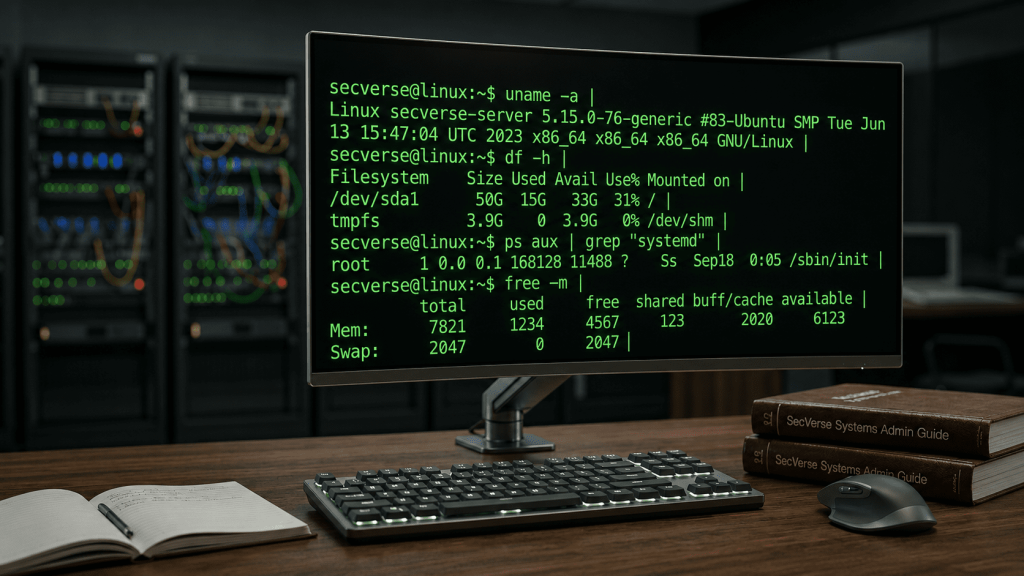
whoami tells you who you are. pwd tells you where you are. ls -la shows everything — including hidden files starting with a dot. Intimidating now. Home in 3 months.
Recommended Resources
| Resource | Type | Best For | Link |
|---|---|---|---|
CompTIA Security+ Study Guide |
Book |
Security+ prep | |
CompTIA Network+ Study Guide |
Book |
Networking foundation | |
The Hacker Playbook 3 |
Book |
Offensive security intro | |
OverTheWire — Bandit |
Platform |
Linux terminal from zero | |
TryHackMe |
Platform |
Structured beginner paths | |
SecVerse Learning Paths Hub |
Resource |
All 14 paths |
Final Thoughts
Cybersecurity is not a career you fall into. It is a field you choose because you are curious about how things work and what happens when they break.
Start with the foundation. Practice every day. Let’s begin.
In the next article, we move from why cybersecurity matters to where you actually go with it. SecVerse covers 14 distinct learning paths — CompTIA, Cisco, Offensive Security, Blue Team, Cloud Security, and more. Most beginners pick a path based on what’s trending rather than what fits how they think, and that mistake costs years. The next article breaks down every direction clearly so you choose once and choose right.
“This article contains affiliate links. See our full disclaimer policy.”